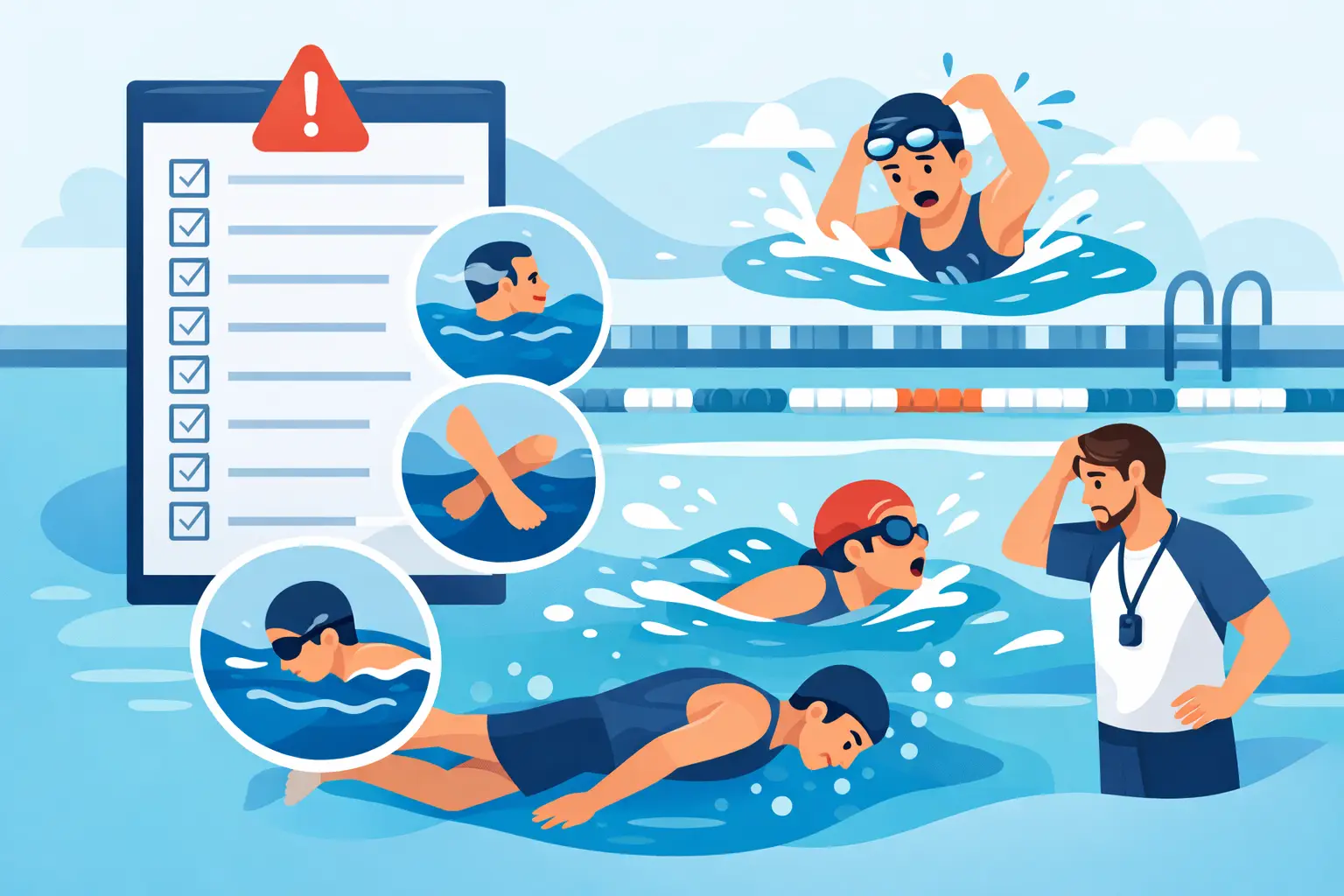
11 Common Swimming Mistakes Beginners Make
The first few swimming lessons often look the same. A beginner kicks harder when they feel unstable, lifts their head to breathe, rushes their arms, and gets tired after one short lap. None of this means they cannot swim. It usually means they are repeating the common swimming mistakes beginners make when they have not yet learned how the body should move in water.
That matters because swimming is not only about staying afloat or getting from one end of the pool to the other. Good technique improves safety, reduces panic, and creates the foundation for stronger skills later, whether the goal is water confidence, SwimSafer progression, lap fitness, or simply feeling calm in deeper water. Beginners do not need more effort first. They need better habits.
Why common swimming mistakes beginners make matter
Swimming punishes inefficient movement quickly. On land, you can force your way through poor mechanics for a while. In water, the body reacts immediately. A tense neck makes breathing harder. A rushed kick wastes energy. Poor timing between arms and breathing disrupts balance.
For children, these mistakes can slow confidence and make lessons feel harder than they should. For adults, they often create frustration because progress seems inconsistent. One lesson feels good, and the next feels impossible. In many cases, the issue is not fitness or courage. It is technique that has not been built in the right order.
This is why structured instruction matters. Strong swimmers are not usually stronger because they try harder. They are stronger because their body position, breathing, timing, and confidence are trained step by step.
Mistake 1: Holding the breath instead of learning rhythmic breathing
Many beginners assume breathing in swimming means taking one big breath and trying to survive the lap. That leads to breath-holding, which builds tension through the chest, shoulders, and face. After a few seconds, the swimmer feels rushed, lifts the head abruptly, and loses control.
Rhythmic breathing is different. You inhale when the mouth is clear, then exhale steadily into the water. This keeps the body calmer and makes each breath easier to time. It also reduces the feeling of panic that many beginners experience.
For nervous learners, this should be trained before full-stroke swimming. Bubble blowing, face immersion, and controlled exhalation are not small drills. They are core safety skills.
Mistake 2: Lifting the head too high
When beginners want air, they often lift the entire head forward. It feels logical, but it creates two immediate problems. First, the hips and legs drop. Second, the body starts fighting the water instead of gliding through it.
A better position keeps the head more neutral, with the eyes looking down or slightly forward depending on the stroke. During front crawl breathing, the head should rotate with the body rather than lift independently. This keeps the body line longer and reduces drag.
Children often do this when they are not yet comfortable putting the face in the water. Adults do it when they do not trust that the next breath will come in time. In both cases, the correction is not just “keep your head down.” The real fix is improving breath timing and water confidence.
Mistake 3: Kicking too hard and from the knees
A common beginner response to instability is stronger kicking. The swimmer feels the body sinking and tries to fix it with force. Usually, that only creates splashing, bent knees, and fast fatigue.
Efficient kicking is relatively narrow and controlled. The movement starts from the hips, while the legs stay long and relaxed. There is still knee movement, but not the bicycle-style kick many beginners use.
This is one of the clearest examples of why more effort does not always equal more progress. A hard, disorganized kick can make a swimmer feel busy without actually making them more stable or faster. For beginners, calm propulsion is more valuable than power.
Mistake 4: Swimming while tense
Tension is one of the biggest barriers to progress, especially for adults who are new to the water or returning after a bad experience. Tight shoulders, clenched hands, stiff ankles, and a rigid neck all make floating and propulsion harder.
Water supports the body best when the swimmer allows it to. That does not mean becoming loose and careless. It means learning controlled relaxation. A swimmer who trusts the water and maintains shape will usually move better than one who is rigid from fear.
This is also where coaching matters. Telling a nervous beginner to “relax” rarely works on its own. Progress comes when drills are sequenced properly, so confidence increases together with skill.
Mistake 5: Rushing the stroke
Beginners often mistake speed for effectiveness. They spin the arms quickly, shorten the stroke, and try to get through the water before balance breaks down. The result is usually the opposite of what they want. They tire quickly and travel less efficiently.
A better stroke has shape and timing. In front crawl, for example, the hand should enter cleanly, extend forward, catch the water, and pull with purpose. If the arms are simply windmilling, there is very little control.
It is normal for stroke rhythm to feel awkward at first. Smooth swimming is built before fast swimming. Once the pattern is reliable, speed becomes easier to add.
Mistake 6: Ignoring body position
One of the most common swimming mistakes beginners make is focusing on the arms and legs while forgetting the body line in between. If the hips sink, the swimmer creates resistance with every movement. Even decent kicking and arm action will not fully solve that.
Body position depends on several linked skills: head alignment, breathing control, core stability, and confidence in the water. This is why beginners sometimes improve suddenly after a small adjustment. When the body sits higher in the water, everything else becomes easier.
For some learners, float work and glide drills feel too basic. In practice, they are often the fastest route to better swimming because they teach balance before complexity.
Mistake 7: Looking for distance before technique
Parents and adult learners sometimes measure progress only by how far someone can swim. Distance matters, but it can be misleading in the early stages. A swimmer who forces one lap with poor breathing and poor control is not always more advanced than a swimmer who can do half a lap with clean technique.
Early progress should include quality markers such as face immersion, calm breathing, streamlining, coordinated kicking, and controlled recovery after a breath. These are the building blocks that support longer swims later.
This matters especially for children in structured programs. Skill progression should be stable enough that the swimmer is not only passing a moment in class but actually retaining the skill under pressure.
Mistake 8: Practicing inconsistently
Swimming is highly technical. If lessons are too far apart or practice is irregular, beginners often repeat the same errors each session because the body never holds onto the correction long enough. This is why some learners feel like they are starting over every week.
Consistency does not mean training every day. It means keeping enough repetition in the schedule for habits to settle. For children, regular lessons build routine and confidence. For adults, consistency reduces fear because the water stops feeling unfamiliar.
Short, focused practice usually works better than occasional long sessions. The goal is not to cram. The goal is to reinforce the right movement patterns before poor ones become fixed.
Mistake 9: Skipping the basics because they seem too simple
Beginners often want to move quickly into full strokes, deep water, or faster swimming. That is understandable, but it can create weak foundations. Floating, kicking drills, breath control, push and glide, and basic sculling may look simple, yet these are the skills that support long-term safety and control.
This is particularly true for swimmers preparing for structured assessments. Test readiness is not only about completing a task once. It is about being able to perform it reliably, with confidence and sound mechanics.
A good program treats the basics as progress, not delay. That is one reason structured swim schools like AQZOG emphasize step-by-step development rather than rushing swimmers into advanced tasks before they are ready.
Mistake 10: Comparing progress too early
Children develop differently. Adults bring different levels of fear, fitness, and coordination. Some learners float naturally but struggle with breathing. Others are comfortable underwater yet find stroke timing difficult.
Comparing one beginner to another often leads to unnecessary pressure. The more useful question is whether the swimmer is progressing in the right sequence. Are they calmer than before? Is breathing more controlled? Is body position improving? Those are meaningful signs of development.
Fast results are possible, but they usually come from structured correction, not from rushing or copying someone else.
How beginners can correct these mistakes faster
The fastest improvements usually come from slowing down and simplifying. Focus on one technical point at a time. If breathing breaks down, address breathing before worrying about speed. If the legs sink, check head position and body alignment before telling the swimmer to kick harder.
It also helps to learn under supervision, especially for children and nervous adults. Technique errors are easier to fix early than after months of repetition. A trained coach can see whether the real problem is timing, posture, fear, or misunderstanding, which saves time and builds progress more efficiently.
Most importantly, treat swimming as a learned skill, not a test of natural ability. Beginners improve when they are taught what to do, why it works, and how to repeat it consistently in the water.
A swimmer does not need perfect technique on day one. They need the right corrections at the right time, so each lesson builds confidence, safety, and real control in the water.