Freestyle Swimming Technique That Works
Most swimmers do not struggle with freestyle because they are unfit. They struggle because small errors in freestyle swimming technique make every lap harder than it should be. A dropped elbow, a late breath, or a sinking hip can turn a straightforward stroke into a tiring one very quickly.
That is why good freestyle is not just about moving faster. It is about swimming with control, conserving energy, and staying safe and confident in the water. For children, that means stronger fundamentals and better long-term progression. For adults, it often means replacing tension with a stroke that finally feels sustainable.
What good freestyle swimming technique actually looks like
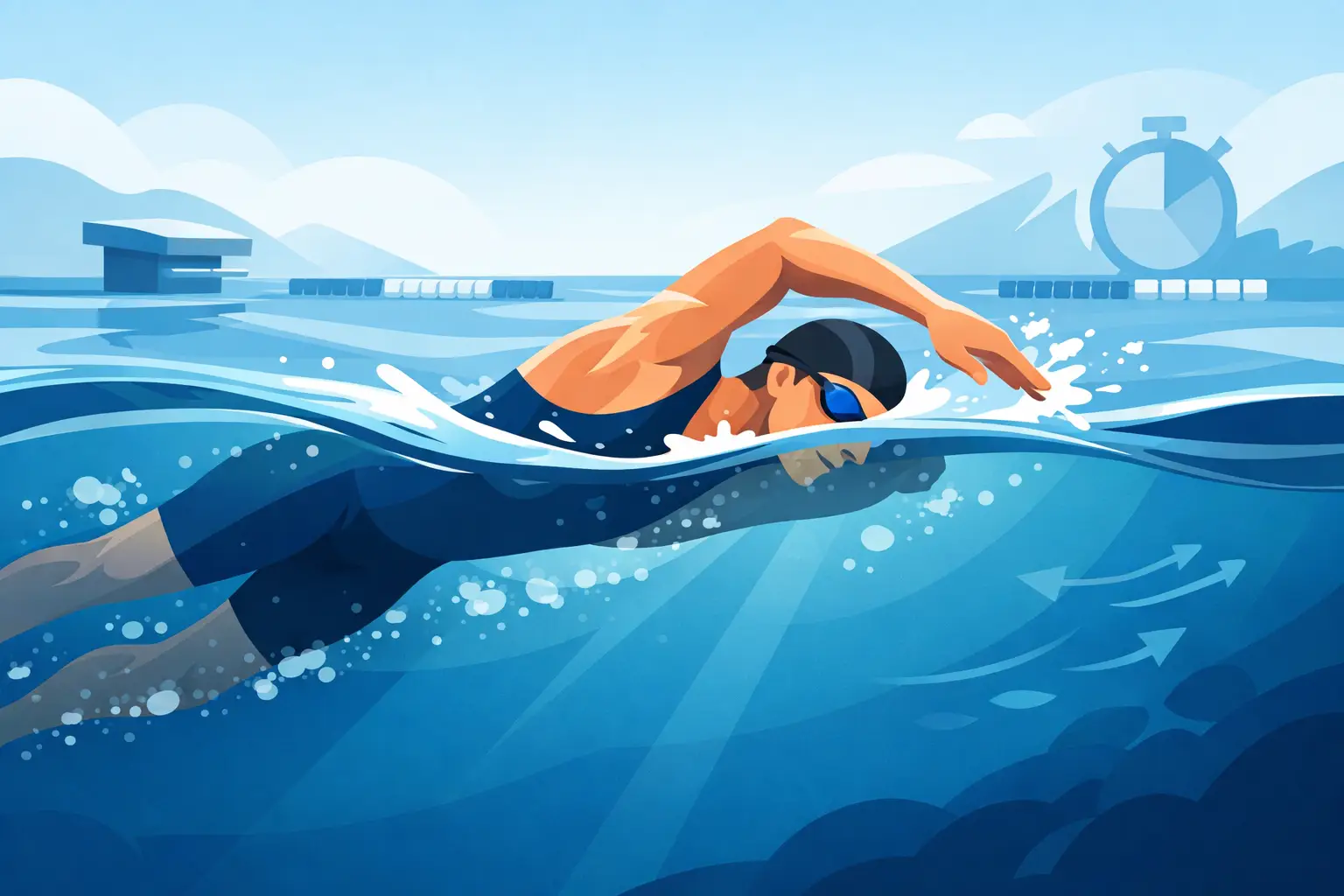
A strong freestyle stroke should look calm before it looks fast. The body stays long and balanced near the surface, the head remains still, and each arm stroke supports forward movement instead of fighting the water. The kick stays compact, and breathing fits into the rhythm rather than interrupting it.
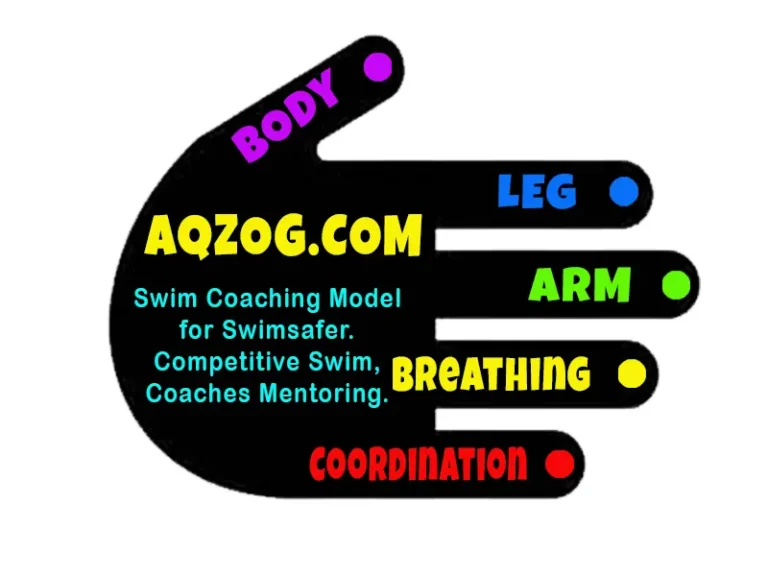
Many beginners assume freestyle is mostly an arm stroke. In practice, it is a coordination skill. Body position, rotation, catch, kick, and breathing all affect one another. If one part breaks down, the whole stroke becomes less efficient.
This is also why two swimmers can work equally hard and get very different results. The swimmer with better technique usually travels farther per stroke, uses less energy, and keeps better timing under fatigue.
Body position comes first
Before looking at the arms, start with the line of the body in the water. A good freestyle position is horizontal and stretched, with the hips close to the surface and the eyes looking slightly forward and down. When the head lifts too much, the hips and legs often sink. Once that happens, the swimmer has to kick harder and pull harder just to maintain progress.
For children, this often shows up as a bicycle-style kick and a lot of splashing with little forward movement. For adult beginners, it can feel like the legs are dragging behind. In both cases, the root problem is usually balance, not effort.
A useful correction is to think about length rather than force. Reach forward through the crown of the head and fingertips, keep the neck relaxed, and allow the chest to settle naturally in the water. That slight pressure in the front of the body helps the hips rise.
Why head position changes everything
The head is heavy, and small changes matter. Looking straight ahead tends to lift the head and shorten the body line. Looking too far down can make the stroke feel disconnected. The best middle ground is a neutral head position where the waterline sits near the forehead and the spine stays long.
This matters even more when breathing. If the swimmer lifts the whole head to inhale, alignment breaks immediately. If the swimmer rotates to the side while keeping one goggle in the water, the stroke remains more stable.
The arm stroke: catch, pull, and recovery
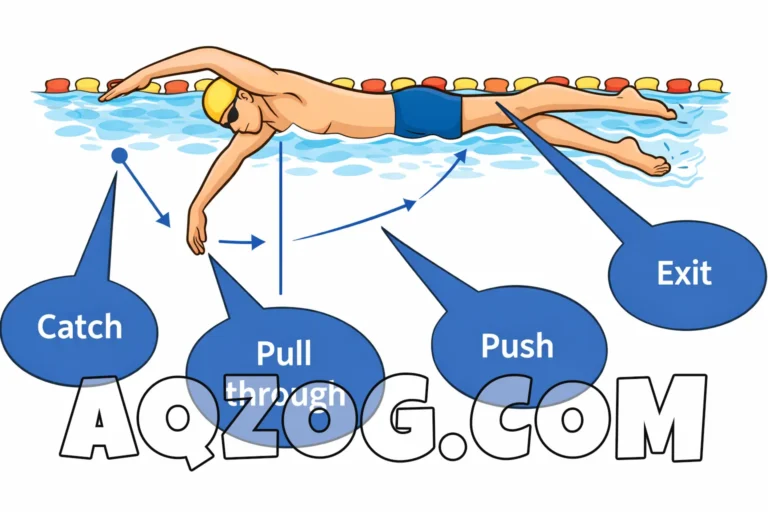
The arm action in freestyle should not feel like windmilling. It should feel purposeful. After the hand enters the water in line with the shoulder, the swimmer reaches forward, sets the catch, and presses water backward. The goal is not to push down. It is to anchor the forearm and hand so the body can move past that point.
This is where many swimmers lose power. They either cross over the center line, pull too straight with a dropped elbow, or rush the stroke before holding the water. All three reduce efficiency.
A better catch begins with a patient front end. The hand extends forward, the elbow stays relatively high, and the forearm angles into a position that can press water back. It takes practice, especially for swimmers who are tense through the shoulders, but it is one of the clearest differences between a tiring freestyle and an effective one.
Recovery should be relaxed, not forced
Once the pull finishes past the hip, the arm recovers over the water. This phase should stay relaxed. A stiff, high, dramatic recovery often wastes energy and adds tension. In most cases, a softer elbow-led recovery works better, particularly for learners building consistency.
There is some variation here. Sprint swimmers may use a faster tempo and a more aggressive recovery. Distance swimmers usually benefit from a smoother rhythm. The right version depends on the swimmer’s goal, but relaxed control is almost always a sound starting point.
Breathing is where many strokes fall apart
A swimmer can have a decent kick and reasonable pull, but if breathing is mistimed, the whole stroke becomes unstable. This is common in both children and adults. The swimmer holds the breath, waits too long to exhale, then rushes to inhale. The result is panic, a lifted head, and broken rhythm.
Good freestyle breathing starts underwater. Exhale steadily through the nose or nose and mouth while the face is in the water. Then, when the body rotates, the breath can be taken quickly to the side without lifting the head.
The phrase many coaches use is simple: breathe low and return fast. The mouth clears the water just enough to inhale, then the face returns to neutral. That keeps the stroke moving.
One side or bilateral breathing?
It depends on the swimmer. Breathing to one preferred side is perfectly acceptable for many beginners and fitness swimmers because it helps them establish rhythm and confidence. Bilateral breathing, where the swimmer alternates sides every three strokes or uses a mixed pattern, can improve balance and awareness. It is useful, but it is not a requirement on every lap.
For younger swimmers or nervous adults, forcing bilateral breathing too early can create more tension than benefit. Technique progression should be structured. First build a calm, repeatable breath to one side, then expand options when the swimmer is ready.
The kick should support the stroke, not exhaust the swimmer
Freestyle kicking is often misunderstood. Bigger splashes do not mean better propulsion. In fact, an oversized kick usually creates drag and wastes energy. A productive freestyle kick is narrow, quick, and generated from the hips with relaxed ankles.
When the knees bend too much and the feet push water downward, the body line suffers. The swimmer may feel busy but not effective. A more efficient kick keeps the legs long, allows a small bend at the knee, and flicks the feet with a light, continuous rhythm.
For some swimmers, especially beginners, the kick is mainly there to maintain balance and body position. For others, such as sprint-focused swimmers, it contributes more directly to speed. Again, the right emphasis depends on the goal. Not every swimmer needs a six-beat kick, but every swimmer benefits from a kick that stays controlled and connected to the stroke.
Timing and rotation make freestyle smoother
Freestyle is easier when the body rotates naturally from side to side. This rotation helps the swimmer reach forward, engage a better catch, and breathe without lifting. It also reduces shoulder strain because the stroke is supported by the whole body instead of just the arms.
Problems begin when swimmers stay flat or over-rotate. Staying too flat limits reach and makes breathing awkward. Over-rotating can cause a pause in front or a snaking body line. The aim is a balanced roll through the torso and hips, with the head staying stable.
Timing matters just as much. The recovering arm should enter as the pulling arm finishes, creating a smooth exchange. Some swimmers glide too long and lose momentum. Others spin the arms too quickly and lose hold of the water. Efficient freestyle sits between those extremes.
Common freestyle mistakes and what they usually mean
When a swimmer looks tired after one lap, the visible mistake is not always the real problem. A rushed breath may come from poor balance. A weak pull may actually start with poor rotation. A heavy kick may be compensating for sinking hips.
That is why technical correction works best when it is specific. Telling a swimmer to kick harder or pull stronger rarely solves the issue on its own. A better coaching approach identifies the first breakdown point and fixes that before adding speed.
In structured lessons, this progression matters. Children learn faster when one skill is layered onto another in the right order. Adults improve faster when they understand what each drill is trying to change and why it matters.
How to improve freestyle swimming technique efficiently
The fastest improvements usually come from slowing down enough to feel the stroke. Swimmers who rush every lap often repeat the same faults at higher effort. A better approach is to work on one technical focus at a time, then gradually build it into full swimming.
For example, a swimmer working on breathing should not try to fix breathing, kick timing, and stroke rate all in the same set. Start with a clear target such as exhaling continuously underwater. Once that becomes more natural, add the next layer.
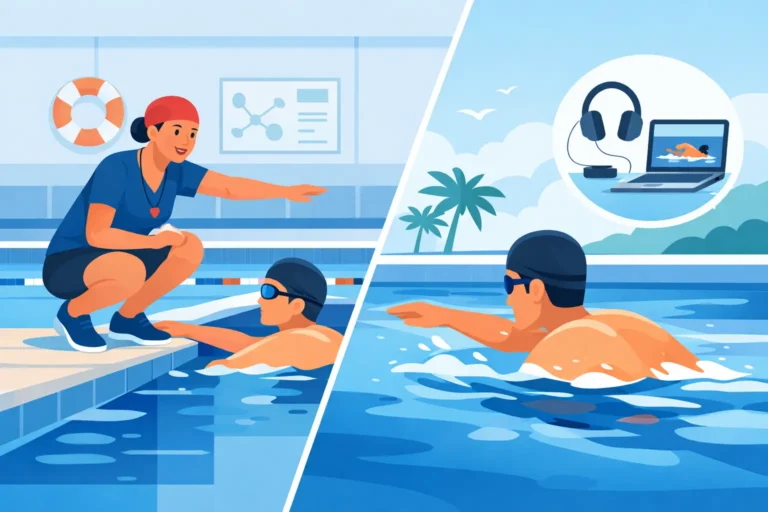
Video feedback, hands-on correction, and structured repetition all help because freestyle is difficult to self-diagnose. What feels straight may actually be crossing over. What feels like a strong catch may be slipping water. This is where coached instruction makes a major difference, especially for learners preparing for swim tests, progressing through levels, or returning to swimming after a long break.
At AQZOG, this kind of step-by-step progression is central to how swimmers build confidence and measurable results. Strong freestyle is not treated as a random collection of tips. It is taught as a sequence of skills that support both performance and water safety.
Why technique matters beyond speed
Freestyle is often the first stroke swimmers want to improve because it is practical, familiar, and used in most swim assessments and fitness training. But the real value goes beyond faster timing. Better technique means less panic during breathing, more control in deeper water, and more confidence over longer distances.
For children, that supports safer movement and stronger readiness for formal progression. For adults, it often opens the door to lap swimming, endurance work, open-water goals, or simply feeling comfortable in the pool again.
If your freestyle feels harder than it should, that is usually good news. It means the biggest gains may not require more effort at all – just better structure, better feedback, and a stroke built on sound habits from the start.
The most useful next step is not to swim harder. It is to swim with a clear technical focus, one correction at a time, until the water begins to work with you instead of against you.