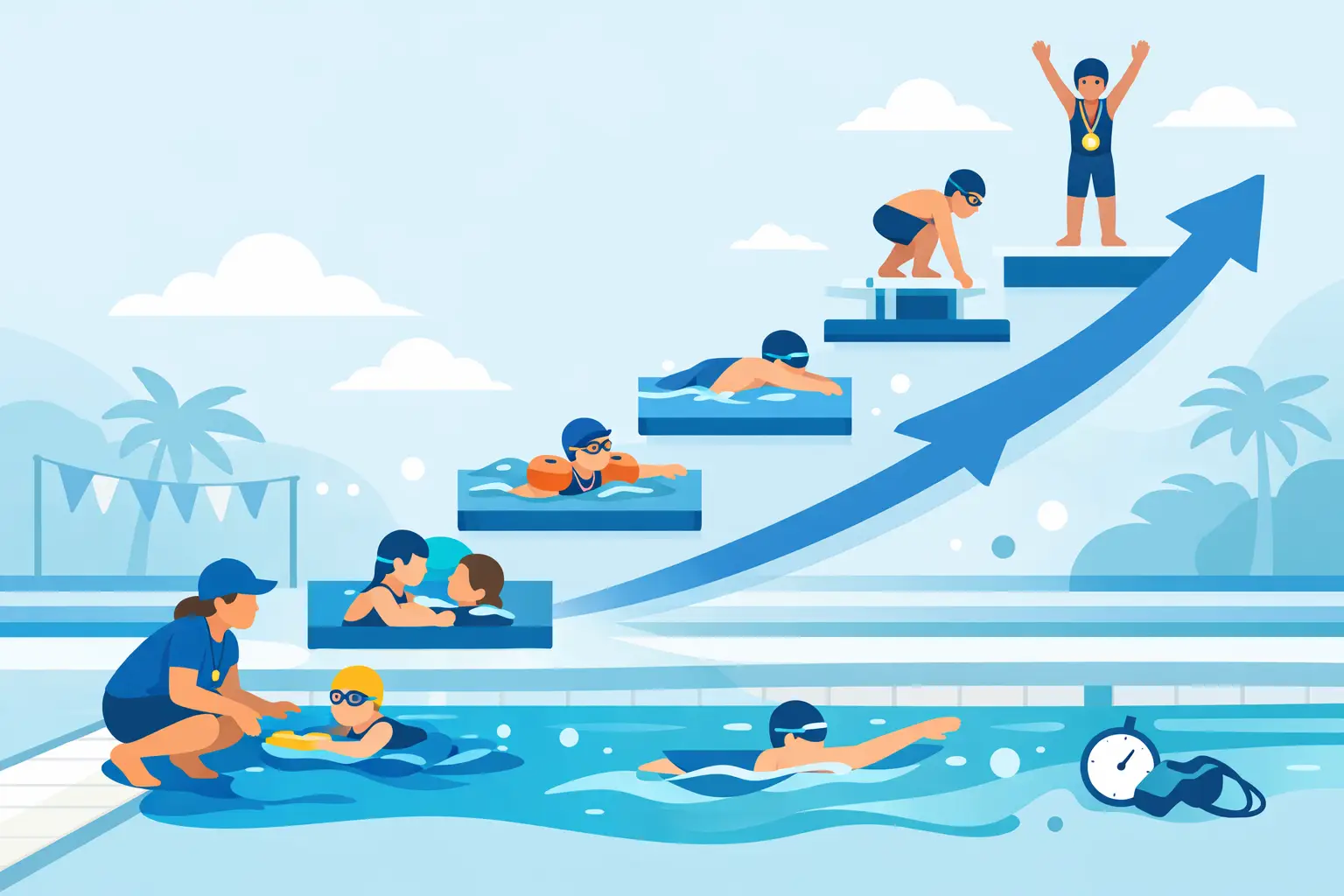
7 Top Benefits of Structured Swim Progression
A child who can kick confidently one week, breathe calmly the next, and recover safely after a slip in the water is not improving by accident. That kind of progress usually comes from a clear system. The top benefits of structured swim progression show up when lessons follow a logical sequence, skills build on each other, and every stage has a purpose.
For parents, that means more than watching a child splash happily at the pool. It means seeing real movement from water adjustment to independent swimming, then onward to safety skills, stroke development, and certification readiness. For adults, it means a more predictable path from fear or hesitation to control, endurance, and confidence. Structure matters because swimming is a life skill, and life skills are best taught in the right order.
Why structured swim progression works
Swimming is one of those activities where skipping steps can create problems later. A learner who is pushed into strokes too early may still be uncomfortable putting their face in the water. Another might move their arms well but panic when they miss a breath. On the surface, both can look like they are progressing. In practice, they are building on unstable foundations.
Structured progression reduces that risk. It breaks learning into manageable stages, with each stage reinforcing balance, breathing, movement, and safety awareness before moving forward. That approach creates more consistent improvement and fewer setbacks, especially for beginners, toddlers, and nervous swimmers.
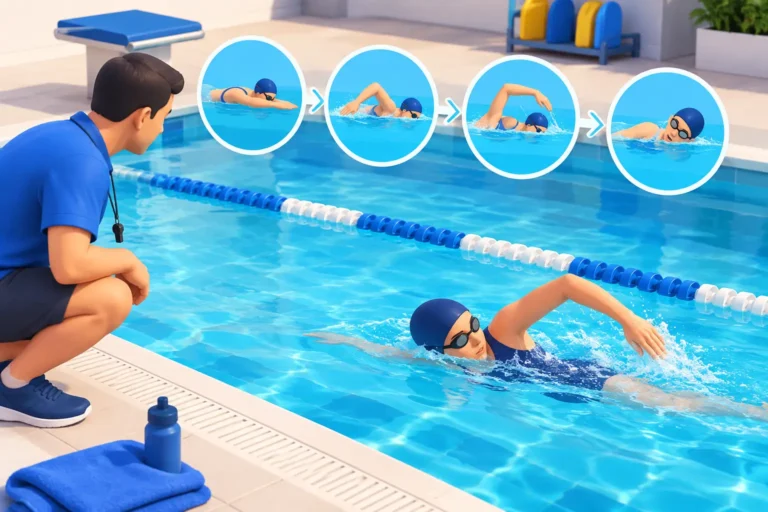
It also helps coaches teach more accurately. Instead of guessing what to do next, the lesson plan follows a tested pathway. If a swimmer is stuck, the issue is easier to identify because the coach can trace it back to a missed skill or weak foundation.
1. Stronger water safety from the beginning
One of the top benefits of structured swim progression is that safety is introduced early, not treated as an extra topic later. In a well-designed program, swimmers do not only learn to move through water. They learn how to enter safely, orient themselves, recover to the wall, float, control breathing, and respond when they feel unsettled.
This matters most for young children, but it is just as relevant for adults. Panic in water rarely comes from a lack of effort. It usually comes from a lack of control. Structured teaching gives swimmers small, repeatable actions they can rely on under pressure.
That does not mean every swimmer becomes water-safe at the same speed. Some children need more repetition before they can float independently. Some adults need more time to relax their breathing. A structured path does not remove those differences. It simply makes progress safer and more measurable.
2. Faster progress because skills are taught in the right order
Many people assume structure means slower learning. In good swim instruction, the opposite is often true. When lessons follow a progression, swimmers waste less time repeating errors that came from being advanced too soon.
A child who first learns body position, kicking rhythm, breath timing, and streamline will usually pick up freestyle and backstroke more efficiently than a child who is told to “just swim” across the pool. An adult beginner who learns submersion and breath control before distance swimming will often improve faster than someone who jumps straight into lap work.
Faster does not mean rushed. It means fewer gaps, less confusion, and more useful practice. That is especially valuable for families who want visible results from weekly lessons or holiday intensives.
3. Better confidence through measurable achievement
Confidence in swimming is not built through encouragement alone. It grows when swimmers can feel and see what they are capable of doing. Structured progression supports that by giving learners achievable milestones.
For a toddler, that might mean comfortable water entry and assisted kicking. For a school-age child, it might mean independent back float, breath control, and short-distance swimming. For an adult, it could be swimming a full lap without stopping or staying calm in deeper water.
These milestones matter because they replace vague hope with evidence. Parents can see what has been learned. Swimmers know what they have completed and what comes next. That kind of clarity reduces anxiety and helps motivation stay strong over time.
This is one reason structured programs tend to work well for nervous learners. Big goals can feel intimidating. Small completed steps feel manageable.
4. Easier identification of weak points
When lessons are unstructured, it can be hard to tell why progress has slowed. Is the swimmer afraid? Is the kick inefficient? Is breathing off? Are they losing balance because the head position is wrong? Without a progression model, these issues blur together.
With structured swim teaching, each stage has expected outcomes. That makes it easier for coaches to spot what is missing and correct it early. A swimmer who cannot sustain freestyle may not need more strength. They may need better exhalation. A child who resists deep water may not lack bravery. They may need more repetition with floating and recovery.
This targeted correction saves time and frustration. It also helps parents understand that slower progress in one area does not mean overall failure. Sometimes a single missing skill is holding back everything else.
5. Stronger readiness for SwimSafer and skill assessments
For many families, swimming lessons are not only about comfort in the water. They are also about formal progression, stage completion, and readiness for recognized benchmarks. That is where a structured pathway becomes especially valuable.
Programs aligned to assessment standards prepare swimmers for the exact skills they will be expected to demonstrate. That includes technique, water safety actions, endurance, and practical understanding. Instead of training randomly and hoping the swimmer will cope during a test, structured progression builds readiness from lesson to lesson.
This is particularly useful for school-age children working toward SwimSafer stages, mock practical tests, or lifesaving-oriented development. It creates a direct link between class content and measurable outcomes. For parents, that provides assurance that lessons are not just keeping children occupied. They are moving them toward recognized standards.
Adults also benefit from this approach. Whether the goal is lap swimming, triathlon preparation, or aquatic industry development, structured instruction makes progression easier to track and easier to trust.
6. More efficient use of lesson time
Pool time is valuable. Families work around school schedules, adults fit lessons around jobs, and private coaching often comes at a premium. A structured learning plan helps make that time count.
Instead of spending each session deciding what to practice, the swimmer follows a progression with clear priorities. Warm-up, skill focus, correction, repetition, and review all support a defined outcome. That creates continuity from one class to the next.
Efficiency does not mean every lesson feels intense. Younger children still need playful engagement. Beginners still need patience. But even fun activities should serve a teaching goal. The best structured programs keep lessons enjoyable while making sure each activity builds toward the next stage.
That balance is one reason experienced swim schools can produce stronger results. AQZOG, for example, has long emphasized structured improvement because it allows swimmers of different ages and goals to move forward with purpose, not guesswork.
7. Long-term skill retention, not short-term performance
Some swimmers can perform a skill once in a lesson but cannot repeat it the following week. That usually points to short-term success without full skill retention. Structured progression helps reduce this problem by reinforcing core actions before introducing more complex ones.
A swimmer who repeatedly practices floating, breathing, and body alignment under different conditions is more likely to retain those skills than one who performs them only briefly before moving on. The same applies to stroke development. Strong basics support long-term technique far better than rushed distance goals.
This matters because swimming is not useful only when conditions are ideal. Real confidence shows when a swimmer can apply learned skills consistently, even after time away from the pool or in a less familiar setting.
The benefits for children and adults are similar, but not identical
Children often gain the most from structure because they are building both water familiarity and listening habits at the same time. They need repetition, routine, and age-appropriate milestones. A structured path gives them security while helping parents see progress clearly.
Adults often value structure for a different reason. Many want efficiency. They do not want vague coaching or endless beginner drills with no sense of direction. They want to know what they are working on, why it matters, and how it leads to a practical result. A progression-based program answers that need.
Still, there are trade-offs. Some swimmers progress quickly in one area and slowly in another. A good program should be structured, but not rigid. The pathway matters, yet skilled coaching must still adapt to fear levels, fitness, age, and learning pace.
Choosing a program with real progression
If you are comparing swim lessons, look beyond class size and price. Ask how the program sequences beginner skills, how progress is measured, and how safety training fits into the lessons. If certification matters, check whether the teaching path supports that goal from the start.
The top benefits of structured swim progression become clear when lessons produce calm swimmers, safer decisions, and visible improvement over time. Whether the learner is a toddler entering the water for the first time or an adult finally learning to swim properly, a clear progression gives every lesson more value.
The best swim journey is not the one that looks fast for a week. It is the one that builds skills in the right order, so confidence lasts when it matters most.