Why Is Swimming an Essential Skill?
A child who slips at a pool edge does not have time to think through instructions. An adult who panics in deep water does not suddenly become calm because they are fit on land. That is why is swimming essential skill is more than a search question. It is a serious question for families, schools, and anyone who spends time near water.
Swimming is not just another enrichment activity. It is a practical life skill that affects personal safety, confidence, physical ability, and long-term independence. For parents, that means giving a child more than a weekly class. It means giving them a structured response to water. For adults, it means replacing fear or uncertainty with control.
Why is swimming an essential skill for life?
The simplest answer is safety. Water is part of daily life, whether that means public pools, beaches, water parks, school programs, vacations, or boating activities. A person does not need to be an athlete to face risk in water. They only need one unexpected moment.
Swimming reduces that risk because it teaches more than forward movement. Proper instruction builds breath control, floating, body position, safe entry and exit, and the ability to stay calm long enough to make good decisions. These are survival skills before they are sports skills.
This matters even more for children. Kids are naturally curious, often fast-moving, and not always aware of danger. A child who has learned how to float, turn, kick, and reach safety has a far better starting point than a child with no formal training. Swimming lessons do not replace adult supervision, but they add a vital layer of protection.
For adults, the value is just as real. Many adults avoid water because they were never taught properly or had a bad early experience. That avoidance can last for years. Learning to swim changes that by turning water from a threat into an environment they can manage.
Swimming teaches survival, not just strokes
One common mistake is to treat swimming as if it is mainly about technique, speed, or collecting certificates. Those goals have their place, but the foundation should always be water survival.
A strong swim program starts with comfort in the water, controlled breathing, floating, kicking, and basic propulsion. It then builds toward treading water, safe movement in deeper areas, and the ability to recover when balance or rhythm is lost. These skills matter because real-life situations are rarely neat. Water can be cold, crowded, unfamiliar, or stressful.
That is why structured progression matters. A learner who jumps too quickly into advanced strokes without mastering the basics may look capable in a short practice lane, but struggle when conditions change. A learner who builds skills step by step tends to become more reliable, more confident, and safer.
For children in particular, survival-based instruction also improves decision-making. They learn pool rules, how to respond to depth changes, why pushing is dangerous, and how to respect water rather than fear it. That combination of skill and judgment is what makes swimming essential.
Why confidence in water must be taught correctly
Confidence is often misunderstood. Some children look fearless in water, but fearlessness is not the same as competence. In fact, overconfidence can create risk if a swimmer does not yet have the control to match their enthusiasm.
Real confidence comes from repeatable skills. A child who can float independently, recover from a face splash, and move to the wall is showing usable confidence. An adult who can regulate breathing and stay composed in deeper water is doing the same. Good instruction builds confidence through measurable progress, not through pressure.
That is especially important for nervous learners. A rushed lesson can reinforce fear. A structured one can steadily remove it. With the right coaching approach, even hesitant swimmers can learn to trust the water, trust their body position, and respond calmly.
Why is swimming essential skill for children?
For children, swimming supports safety first, but the benefits go further. It develops body awareness, coordination, stamina, and listening skills. It also teaches children how to follow sequences, respond to correction, and work toward milestones.
In practical terms, swimming gives children an ability they may need for school activities, camps, vacations, and public water environments. It also helps them participate rather than sit out. That matters socially as well as physically.
There is also a long-term advantage in starting early. Children who begin with proper fundamentals often progress more efficiently into stronger strokes, deeper-water readiness, and formal assessments. They tend to carry better habits because they are not first trying to undo years of poor technique or fear-based movement.
For parents, this makes swim lessons one of the few activities that combine safety training, physical development, and measurable progression in one place. It is not about filling a schedule. It is about preparing a child for real-world situations around water.
The role of structured progression
Not all swim learning is equal. Casual exposure to water can help with comfort, but it does not guarantee skill acquisition. A child who splashes happily every weekend may still be unable to float, breathe properly, or recover after submersion.
Structured instruction solves this by breaking learning into stages. Each stage builds on the last, with clear outcomes and coaching feedback. That is why progression systems are so valuable. They make development visible and reduce guesswork for parents.
In Singapore, many families look for pathways aligned with recognized benchmarks because they want more than informal practice. They want test readiness, consistent standards, and confidence that their child is developing the right skills in the right order. That is one reason established providers such as AQZOG place strong emphasis on structured swim education rather than casual water play alone.
Swimming matters for adults too
Adults sometimes assume they have missed the window to learn. That is not true. Adults can learn effectively, and often quite quickly, when lessons are structured around their needs.
The key difference is that adults bring different barriers. Some have fear. Some have embarrassment. Some are physically tense in water even when they understand instructions. Others want swimming for a specific goal such as fitness, lap swimming, triathlon training, or improving safety before becoming parents.
Because of that, adult swim instruction should be practical and individualized. A complete beginner may need to spend time on breathing and floating before any formal stroke work. A fitness swimmer may need technique correction to improve efficiency. A nervous learner may need a slower pace, but not lower expectations.
Swimming becomes essential for adults because independence matters. Being unable to swim can limit travel, recreation, family activities, and confidence in emergencies. Learning removes that limitation.
Fitness is a benefit, but not the main reason
Swimming is excellent exercise. It builds cardiovascular endurance, supports joint-friendly movement, and strengthens the whole body. For many adults, it is one of the most sustainable forms of training because it combines resistance and low impact.
Still, fitness should not overshadow the main point. If someone asks why is swimming essential skill, the answer is not simply calorie burn or muscle tone. Those are bonuses. The core reason is capability in water.
That distinction matters because it affects how lessons are taught. Programs that focus only on exercise may skip survival elements. Programs that focus on essential skill development teach fitness within a safer and more complete framework.
What parents and learners should look for
If swimming is an essential life skill, then the standard for instruction should be high. Families should look for experienced coaches, clear progression, safety-focused teaching, and a learning plan that matches age and ability.
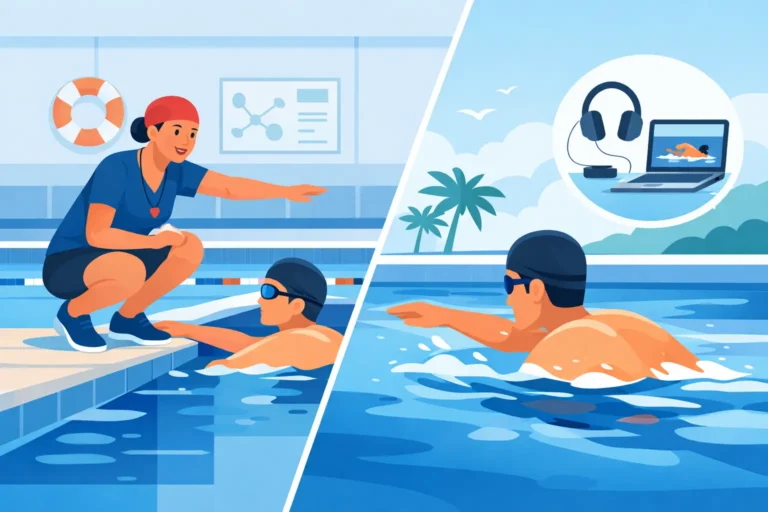
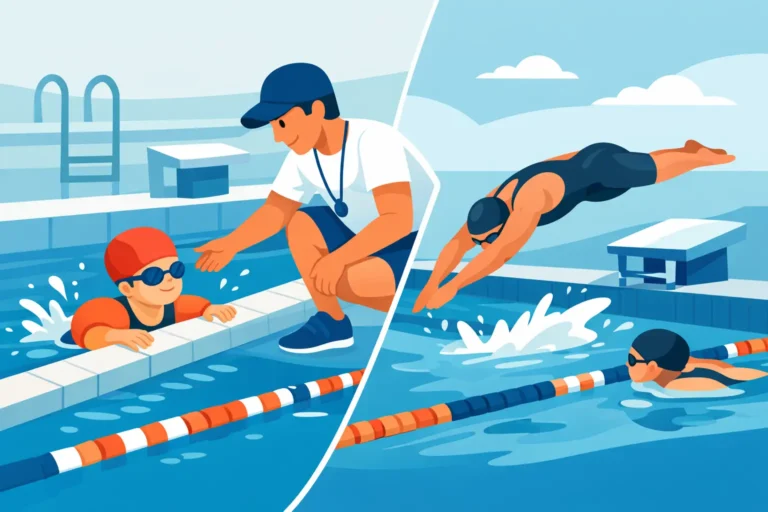
For young children, that means patient water introduction followed by systematic skill building. For school-age learners, it means measurable development, stroke foundations, and readiness for stage-based assessments where relevant. For adults, it means coaching that addresses fear, technique, and practical goals without making the learner feel out of place.
Convenience matters too, but only after quality. The nearest class is not always the best choice if it lacks structure or consistency. A good program should show learners where they are, what comes next, and what skills they are expected to demonstrate over time.
The real value of learning to swim
Swimming changes what a person can do, but more importantly, it changes how they respond. A child who falls into water has a better chance if they have trained their body to float and recover. An adult at a beach is safer if they understand breath control and basic self-rescue. A family enjoys water more when confidence is built on real ability.
That is why swimming stands apart from many other activities. You can live without learning tennis, piano, or golf. You should not have to face water without at least basic swimming competence.
If you are deciding whether lessons are worth the time, the better question is not whether swimming is useful. It is whether safety, confidence, and long-term independence are worth building early and building properly.