Kids Water Safety Classes That Build Real Skills
The child who loves the pool most is not always the child who is safest in it. Confidence can look impressive from the deck, but real water safety shows up in quieter skills – how a child enters the water, recovers after submersion, floats when tired, follows instructions, and stays calm enough to make good decisions. That is why kids water safety classes matter so much. They are not just about getting children comfortable in water. They are about building habits and responses that can protect them in real situations.
What kids water safety classes should actually teach
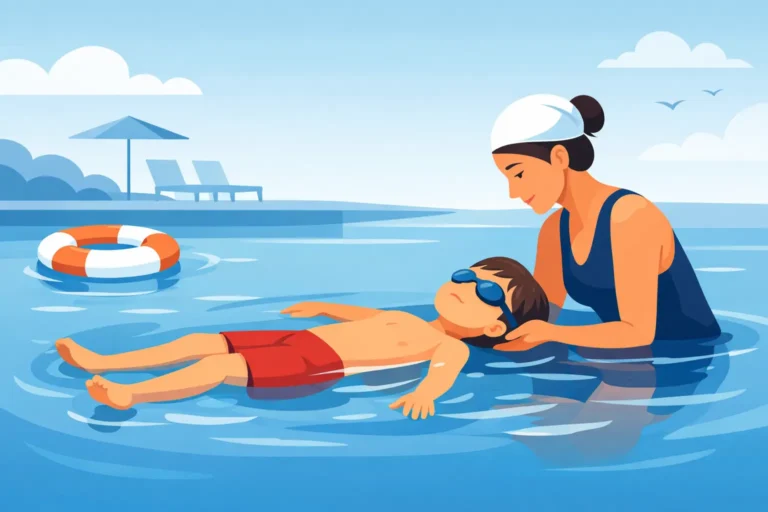
Many parents start by looking for a class that helps their child stop being afraid of water. That is a reasonable first goal, but it is only the beginning. A strong program should move beyond comfort and teach practical survival skills, controlled breathing, floating, kicking, safe entries, and how to return to the wall or exit point.
For school-age children, water safety also includes listening discipline, awareness of pool rules, and the ability to respond when something does not go as planned. A child who can swim a short distance but panics after swallowing water is still at risk. A child who can float, recover, and follow a coach’s instructions is building the kind of control that matters.
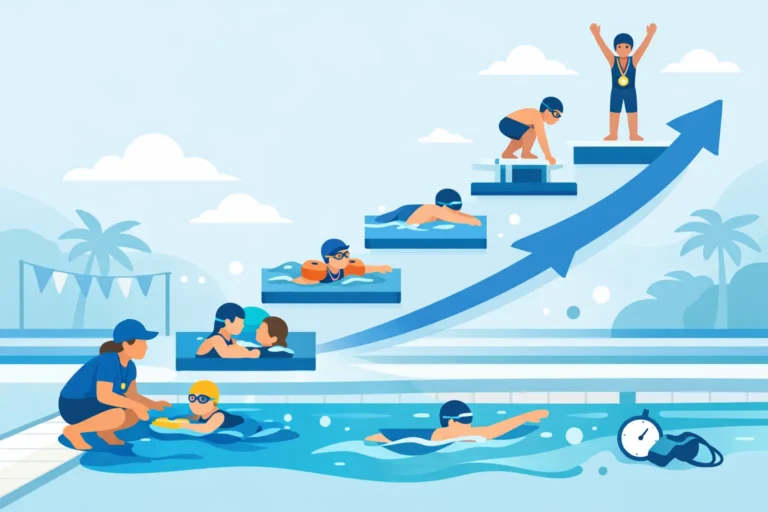
This is where structured progression makes a difference. Skills should be taught in a logical order, reinforced consistently, and measured over time. Random exposure to water can create familiarity. It does not always create readiness.
Why structured progression matters more than quick confidence
Parents often ask how fast a child can learn. The honest answer is that it depends on age, temperament, attendance, and previous exposure. Some children settle quickly. Others need more repetition before they trust the water enough to perform skills well. The goal is not to rush confidence. The goal is to build reliable competence.
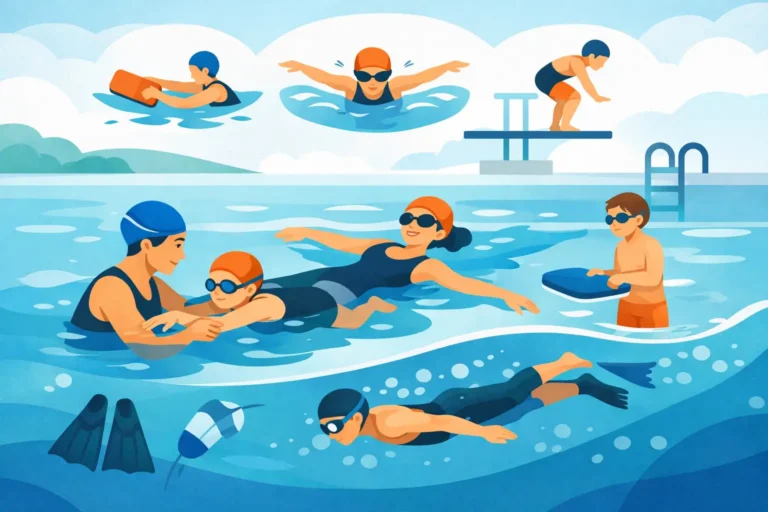
That is why the best kids water safety classes are progression-oriented. Each level should prepare the child for the next one, with clear benchmarks instead of vague promises. A good program does not simply keep children busy in the pool. It develops breath control, body position, float recovery, propulsion, and basic rescue awareness in a sequence that makes sense.
This matters even more when families want formal skill recognition later. In a structured pathway, children do not just attend lessons. They work toward measurable standards, stronger technique, and better test readiness.
The difference between play-based exposure and true safety training
Young children learn through play, and there is value in making early lessons enjoyable. But there is a difference between playful teaching and unstructured teaching. One builds skills through age-appropriate methods. The other may create the appearance of progress without enough technical foundation.
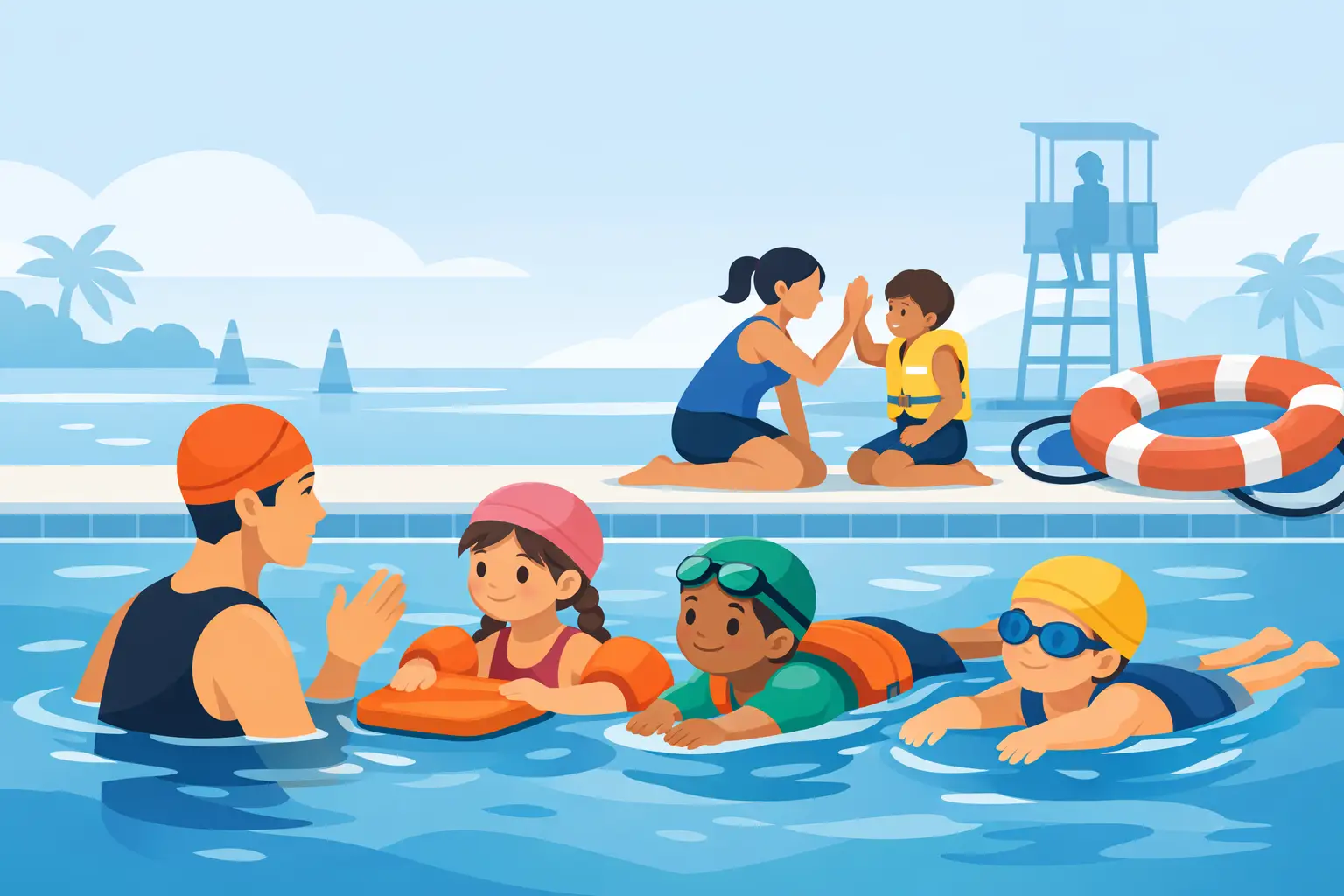
For toddlers and preschoolers, a class should use songs, games, and repetition to build trust while still teaching key responses such as holding the wall, kicking with support, blowing bubbles, and safe assisted movement. For older children, the teaching style can become more direct and performance-based because they are ready for correction, repetition, and skill targets.
Parents should be careful about programs that focus only on fun or only on strokes. Water safety sits in the middle. Children need lessons that are engaging enough to keep them cooperative and structured enough to produce real outcomes.
What parents should look for in a program
The strongest programs usually share a few traits. First, the coaches teach with consistency. Instructions are clear, standards are repeated, and children know what is expected each week. Second, the curriculum has a visible pathway. Parents should be able to understand what their child is learning now, what comes next, and how progress is assessed.
Third, safety is built into the lesson design itself. That includes controlled class management, close supervision, sensible coach-to-student ratios, and tasks that match the child’s level. Throwing advanced skills at a nervous beginner rarely builds confidence. It usually builds resistance.
Fourth, the program should treat swimming as a life skill, not just an activity. That means the child is learning how to move safely in water, recover from mistakes, and build endurance over time. A school with a strong safety culture will talk about survival skills, confidence, and progression in the same sentence.
In Singapore, many parents also value alignment with SwimSafer standards because it gives structure to learning and supports long-term development. A child who progresses through recognized stages has clearer goals and a better framework for assessment preparation later on.
When should a child start water safety lessons?
Earlier is often better, but only if the teaching matches the child’s developmental stage. Toddlers can begin water introduction lessons that focus on comfort, routine, assisted movement, and positive associations with the pool. These lessons are not about independent swimming. They are about laying the groundwork for later skill development.
Preschoolers can begin learning more deliberate water responses. This is often the stage where floating, kicking, submersion readiness, and simple movement patterns start to become more reliable. School-age children can usually handle more formal instruction and are often ready for clearer technique goals and structured progression benchmarks.
There is no single perfect age. A cautious four-year-old and a fearless seven-year-old may need equally thoughtful instruction, just for different reasons. Good classes adapt the method without lowering the safety standard.
Group classes or private lessons?
This depends on the child and the goal. Group lessons work well for many children because they build routine, listening skills, and comfort learning alongside peers. They also give families a consistent weekly schedule and a progression environment that feels steady and familiar.
Private lessons can be the better choice when a child has high anxiety, very specific skill gaps, or a short timeline before an assessment. Individual coaching allows more repetition, faster correction, and tighter lesson customization. Semi-private lessons can be a practical middle ground for siblings or friends who are close in ability.
Neither format is automatically better. The right choice depends on how your child learns, how quickly you want to address weaknesses, and whether your priority is broad progression or targeted improvement.
Signs a class is working
Progress in swimming is not always dramatic from one week to the next. Often, the first signs are behavioral. A child enters the pool with less hesitation. They listen faster. They recover more calmly after mistakes. They stop clinging and start participating.
Technical progress follows. You may notice better breathing control, stronger kicking, improved float posture, or the ability to move a short distance more independently. Over time, these pieces come together into something more important than a single new stroke. They become evidence that the child is safer, steadier, and more capable in water.
Parents should also expect some unevenness. Children often improve quickly in one area and more slowly in another. A child may learn to kick before they are comfortable floating on their back. Another may be brave in shallow water but tense in deeper water. That does not mean the program is failing. It means skill development is happening in layers.
Why consistency matters more than intensity
Holiday intensives can be useful, especially when a child needs a confidence boost or wants to prepare for a test. But for most beginners, weekly lessons create better long-term retention. Water safety is built through repeated exposure, coaching correction, and muscle memory over time.
Children need enough practice to remember what to do when they feel challenged in water. That kind of response does not come from one good lesson. It comes from consistent training. Families who treat lessons as a regular part of their child’s development often see stronger results than those who stop and start throughout the year.
A school such as AQZOG builds around this principle by focusing on structured progression, safety outcomes, and measurable improvement rather than one-off pool exposure. That approach is especially valuable for parents who want confidence with purpose, not confidence without control.
The bigger goal behind water safety training
Swimming lessons are often judged by visible milestones – putting the face in, swimming a few yards, passing a level. Those are meaningful steps, but the bigger goal is judgment under pressure. Can a child stay calm, follow instructions, recover balance, and make a safe choice in water?
That is what strong water safety classes are really building. Not just movement, but response. Not just confidence, but control. Not just participation, but readiness.
If you are choosing a program for your child, look past the sales language and ask what skills are actually being taught, how progression is measured, and whether safety is treated as a core outcome. The right class does more than help a child enjoy the pool. It gives them skills they can carry for life.