How to Improve Freestyle Breathing Fast
One missed breath can turn a comfortable freestyle lap into a rushed, tiring struggle. If you are trying to figure out how to improve freestyle breathing, the answer is usually not “breathe harder.” It is better timing, better body position, and better control in the water.
Freestyle breathing is one of the most common sticking points for both children and adults. Beginners often hold their breath too long, lift their head too high, or wait until they feel desperate for air. More experienced swimmers may still lose rhythm because their kick, pull, and rotation are not working together. The good news is that breathing can be trained in a structured way, and when it improves, everything else in freestyle usually improves with it.
Why freestyle breathing feels difficult
Most swimmers assume the problem is lung capacity. In reality, freestyle breathing problems are more often technical than physical. You may be strong enough to swim the distance, but if your breathing pattern breaks your body line, water resistance increases and every stroke becomes more tiring.
The biggest issue is usually head position. When a swimmer lifts the head forward to breathe, the hips and legs tend to drop. That creates drag and makes the next breath feel even harder to get. It becomes a cycle – poor breath leads to poor position, and poor position makes the next breath more stressful.
Another common issue is delayed exhalation. Many swimmers keep the air in while their face is in the water, then try to exhale and inhale at the same time when they turn to breathe. That short window is not enough. Good freestyle breathing starts underwater, not at the side.
How to improve freestyle breathing with better timing
If you want a single correction that gives fast results, focus on timing your breath earlier. The breath should happen as part of your body rotation, not as a separate movement.
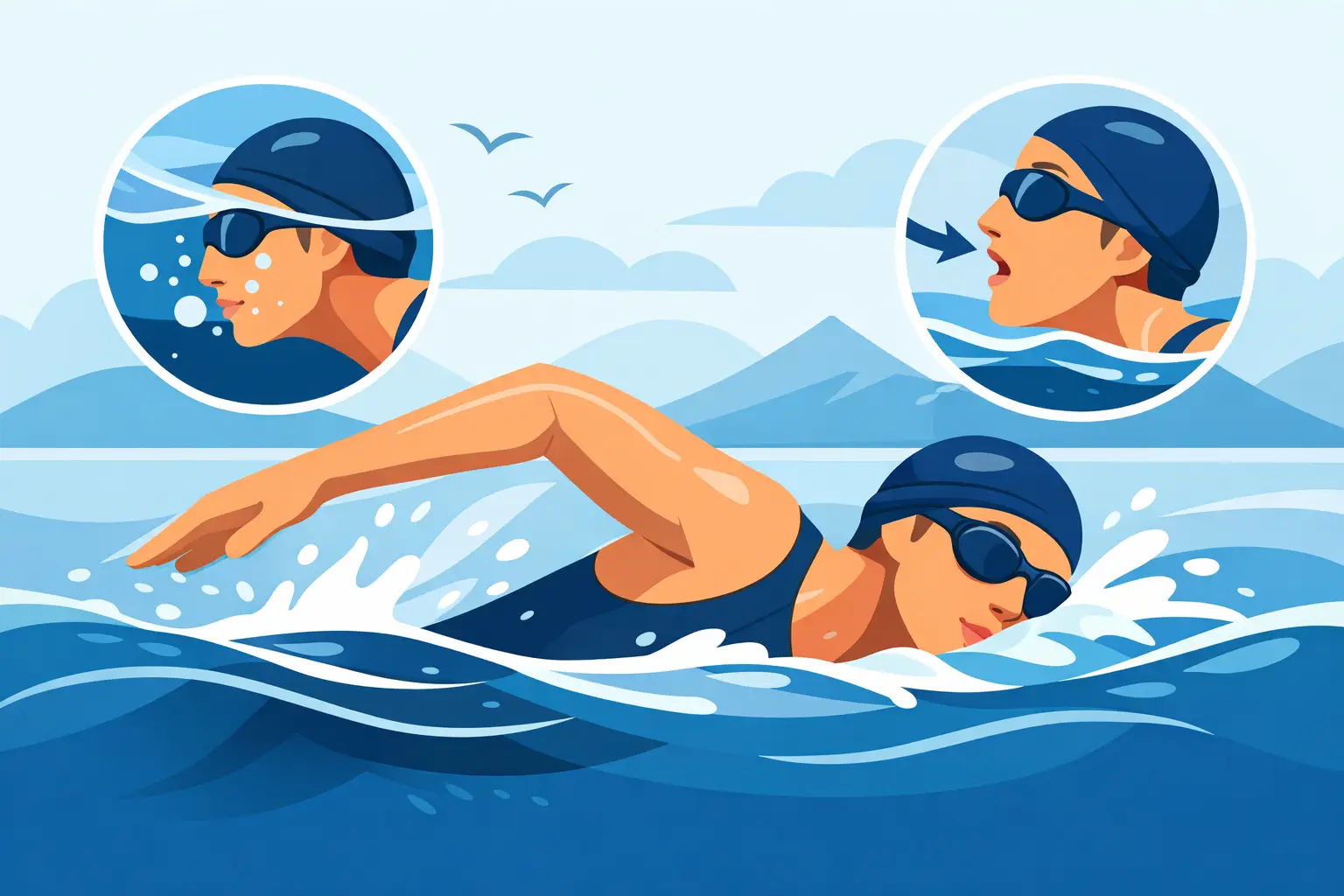
As one arm finishes the pull and the body rotates, the head turns with the body just enough for the mouth to clear the water. One goggle can stay in the water. That is often a useful cue because it prevents over-rotation and keeps the head low. Once the breath is taken, the head returns to neutral quickly.
Many swimmers wait until the recovering arm is already far forward before turning to breathe. By then, the body has missed the natural rotation window. The breath becomes rushed, the head lifts, and the stroke loses rhythm. Earlier timing creates a calmer inhale and a smoother return to the water.
Exhale continuously, not all at once
This is one of the simplest fixes, yet it changes freestyle breathing quickly. Exhale slowly and steadily while your face is in the water. By the time you turn to the side, the lungs should be ready to take in fresh air.
Children often need this explained very clearly. Adults do too. If you hold your breath underwater, carbon dioxide builds up and creates that panicked feeling even if you still have enough oxygen. Steady bubbles help prevent that pressure.
A simple practice cue is this: face in the water, breathe out through the nose or nose and mouth, turn, inhale, and return the face down. Keep it calm. If the exhale is forced or explosive, you may feel tense and lose rhythm.
Body position matters more than most swimmers realize
Learning how to improve freestyle breathing is not only about the lungs or the head. It is also about keeping the body long and balanced.
When your hips and legs stay near the surface, breathing becomes easier because the stroke stays efficient. When the lower body sinks, every breath feels late and rushed. That is why strong body alignment is part of breathing training.
Pressing the head down too aggressively is not the answer, but looking slightly downward rather than forward usually helps. The neck should stay relaxed. The body should rotate as a unit from the hips and torso, rather than twisting the head independently.
For swimmers who are tense, a board is not always the best breathing tool. Kickboards can sometimes lift the head and encourage poor alignment. In many cases, streamlined kicking, side kicking, or supported drills with proper posture produce better results.
Drills that help improve freestyle breathing
The best drills are the ones that isolate one problem at a time. If a swimmer has poor balance, poor exhalation, and poor timing all at once, trying to fix everything in full stroke can be frustrating.
Side kicking is one of the most effective drills. Lie on one side with the lower arm extended and the upper arm resting by the side. Keep the face low, rotate just enough to breathe, and return the face into the water. This teaches balance and shows that breathing can happen without lifting the head.
Single-arm freestyle is also useful. Swim with one arm while the other stays extended in front. This slows the stroke down and gives the swimmer time to feel when the body rotates naturally for the breath.
A simple bubble-breath drill can help younger swimmers and anxious adults. Stand or hold the pool edge, place the face in the water, blow bubbles steadily, then turn to the side to inhale. It sounds basic, but many breathing issues begin with discomfort during exhalation.
If you are more advanced, try breathing every three strokes for short sets, then return to your normal pattern. This can improve balance from both sides, but it is not a rule for every swimmer. For sprinting or open-water racing, breathing every two strokes may still be the better choice. It depends on speed, comfort, and the goal of the session.
Common mistakes when improving freestyle breathing
Some swimmers try to solve breathing issues by taking fewer breaths. That can work briefly, but it usually masks the problem instead of fixing it. In training, controlled regular breathing is often more valuable than breath restriction.
Another mistake is over-kicking to stay afloat during the breath. A stronger kick can support body position, but if the kick becomes frantic every time you turn to breathe, your stroke is compensating for a technical fault.
Crossing the arm over the center line is another hidden issue. When the hand enters too close to the middle, the body may feel unstable during the breath. A cleaner hand entry in line with the shoulder often improves balance immediately.
There is also the question of bilateral breathing. It is useful, but not mandatory at all times. Some swimmers become so focused on breathing to both sides that they lose their rhythm entirely. A better approach is to build comfort on both sides in drills, then use the race or training pattern that best supports efficiency.
How parents and adult learners should approach progress
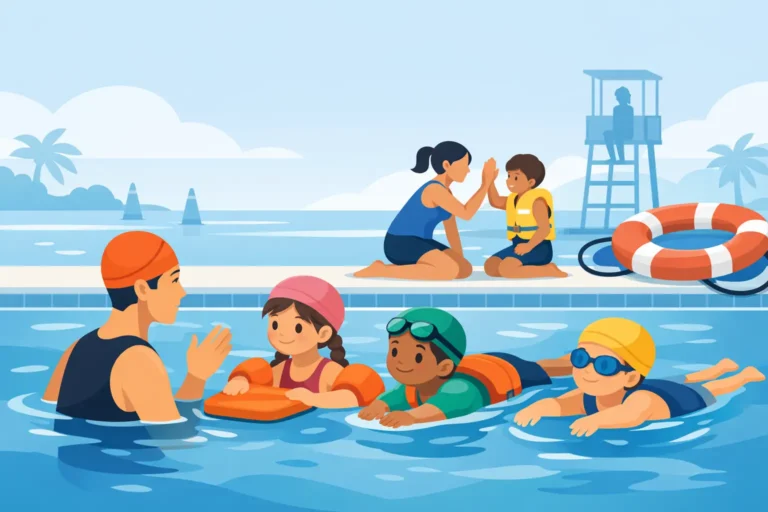
For children, freestyle breathing should be taught progressively. First, they need comfort putting the face in the water and blowing bubbles. Then they need side breathing balance. Only after that should full-stroke breathing become the main focus. Rushing this sequence often creates fear, swallowing water, and poor habits.
For adults, especially beginners, the challenge is often tension rather than understanding. They know what to do, but they stiffen up when the face goes in the water. In that case, slower drills, shorter repeats, and repeated success over a few meters work better than forcing long laps.
This is where structured coaching makes a real difference. At AQZOG, freestyle breathing is taught as part of a clear progression, because swimmers improve faster when each skill is built in the right order. That matters for children developing confidence and for adults who want measurable results without wasting time on guesswork.
How to tell if your freestyle breathing is improving
The first sign is not always speed. Often, it is calmness. You stop feeling rushed at every breath. Your stroke count may become more consistent. You may find that you can finish a lap without feeling out of breath even though your effort level stays the same.
Another sign is cleaner body rotation. The breath feels like part of the stroke instead of an interruption. You spend less time recovering after each length, and your swimming becomes more repeatable.
If you want a practical test, swim a short set at an easy pace and ask yourself whether you can maintain the same breathing rhythm from the first lap to the last. If the answer is yes, your mechanics are likely improving. If the first lap feels controlled but the second falls apart, the skill is not stable yet.
Freestyle breathing gets better when practice is specific, patient, and technically correct. A swimmer does not need to fight the water for air. With the right timing, steady exhalation, and balanced body position, breathing becomes part of the stroke you can trust. That is when confidence grows, and real progress starts to show every time you push off the wall.