Breaststroke Whip Kick
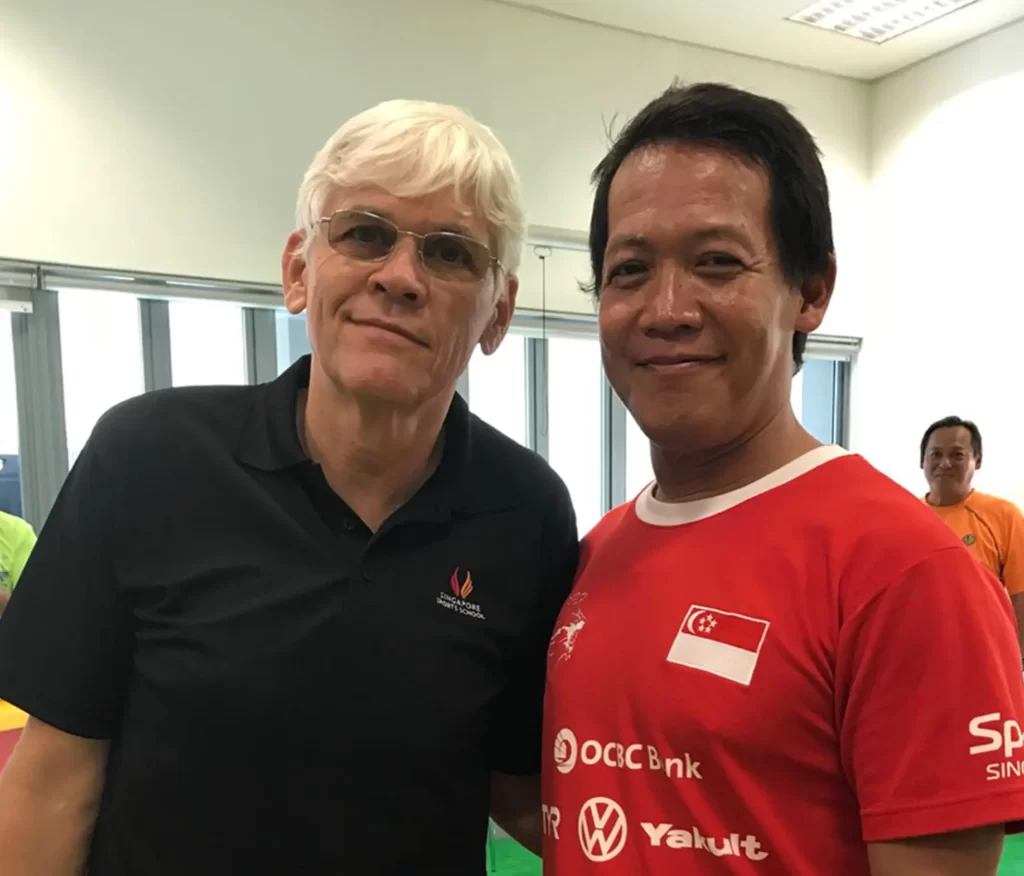
Breaststroke Whip Kick- The Evolution and Understanding
Breaststroke is often described as the most technical of the four competitive swimming strokes. Unlike freestyle or backstroke, where propulsion is largely continuous, breaststroke relies heavily on timing, symmetry, and precision, particularly in the leg action known as the whip kick. One of the most influential figures in shaping modern understanding of breaststroke technique—especially the whip kick—is József Nagy.
Although not always widely known outside coaching circles, József Nagy’s work has had a lasting impact on how breaststroke is taught, analysed, and refined. His contribution lies not in inventing the kick itself, but in clarifying its biomechanics, efficiency, and teaching progression, helping swimmers move from inefficient leg actions to powerful, legal, and sustainable breaststroke propulsion.
This article explores who József Nagy was, his influence on breaststroke technique, and how his insights on the whip kick continue to shape swimming education today.
Who Was József Nagy?
József Nagy was a respected European swimming coach and technician, best known for his technical analysis of breaststroke mechanics, particularly the leg action. He belonged to a generation of coaches who focused deeply on biomechanics, efficiency, and hydrodynamics, rather than relying purely on repetition or strength-based training.
Nagy worked extensively with competitive swimmers and coaches, contributing to:
- Technical breakdown of breaststroke movements
- Teaching progressions for leg coordination
- Correction of common breaststroke kick faults
- Understanding propulsion versus resistance in leg movements
His ideas gained traction among elite coaches and later filtered down into age-group teaching systems and coach education materials worldwide.
Breaststroke Before Modern Whip Kick Understanding
Before the refinement of the whip kick, breaststroke leg action often suffered from:
- Excessive knee width
- Bicycle-style pedalling
- Overly wide or slow recovery
- Poor ankle positioning
- Large drag phases with little propulsion
Many swimmers generated movement, but not efficient forward propulsion. This led to wasted energy, increased resistance, and difficulty maintaining rhythm, especially over longer distances.
József Nagy’s work helped clarify why certain leg movements worked and others did not, shifting breaststroke teaching from “how it looks” to how it functions in water.
What Is the Breaststroke Whip Kick?
The whip kick is the primary propulsive element of breaststroke. Unlike flutter kicking, which alternates legs, the whip kick is:
- Simultaneous
- Symmetrical
- Circular in nature
- Driven by hip rotation, knee flexion, and ankle eversion
Nagy emphasised that the whip kick is not simply about pushing water backwards, but about accelerating water using a curved, accelerating motion, similar to cracking a whip.
József Nagy’s Key Contributions to the Whip Kick
1. Emphasis on Acceleration, Not Force
One of Nagy’s most important insights was that propulsion comes from acceleration of water, not brute force.
He taught that:
- The kick should start smoothly
- Speed should increase toward the end of the movement
- The final snap of the feet is where most propulsion occurs
This understanding helped swimmers stop “pushing” water and start whipping through it, improving efficiency.
2. Correct Knee and Hip Relationship
Nagy highlighted the importance of knee position relative to the hips.
Key principles included:
- Knees should not drop excessively downward
- Knees should not separate too widely
- Hip rotation should initiate the kick, not the knees alone
This reduced frontal resistance and improved streamline during the recovery phase.
3. Ankle Eversion and Foot Positioning
One of Nagy’s most cited technical points involved ankle flexibility and foot angle.
He emphasised:
- Turning the feet outward during the propulsion phase
- Using the inside surface of the foot and lower leg
- Maintaining relaxed but mobile ankles
This insight influenced how coaches began prioritising ankle mobility drills in breaststroke training.
4. Narrow Recovery, Powerful Propulsion
Nagy distinguished clearly between:
- Recovery phase (minimise drag)
- Propulsive phase (maximise acceleration)
He taught that:
- The heels should recover close to the body
- The recovery should be narrow and controlled
- Power should only be applied during the outward and backward whip
This reduced wasted energy and improved rhythm.
5. Timing Between Kick and Glide
Another major contribution was Nagy’s emphasis on timing and patience.
He warned against:
- Rushing into the next stroke
- Kicking before the body is aligned
- Overlapping arm and leg propulsion incorrectly
The whip kick, when timed correctly, allows the swimmer to:
- Ride the momentum
- Extend the glide
- Maintain speed with less effort
This principle is now standard in modern breaststroke coaching.
Influence on Competitive Breaststroke
While breaststroke rules have evolved over time, Nagy’s principles remain relevant across all distances:
- 50m sprint breaststroke
- 100m race pace breaststroke
- 200m endurance breaststroke
Elite swimmers who execute efficient whip kicks demonstrate:
- Strong acceleration phases
- Minimal drag during recovery
- Consistent speed maintenance
- Reduced fatigue
Many modern champions benefit indirectly from Nagy’s ideas, as his concepts have been absorbed into global coaching methodology.
Impact on Teaching and Swim Education
Beyond elite swimming, Nagy’s contribution is especially important in learn-to-swim and development programs.
His ideas support:
- Teaching whip kick on land before water
- Breaking the kick into phases
- Avoiding bicycle kick habits early
- Using drills to feel water acceleration
This has influenced:
- Age-group swim programs
- SwimSafer and survival breaststroke teaching
- Coach education courses worldwide
Relevance to Survival and SwimSafer Breaststroke
In survival swimming, efficiency matters more than speed.
The whip kick principles described by Nagy support:
- Energy conservation
- Stable body position
- Head-up or survival breaststroke
- Long-distance swimming with minimal fatigue
This makes his contribution valuable not only for racing, but also for water safety and survival education.
Common Mistakes Nagy Helped Address
József Nagy’s work helped correct:
- Bicycle kicking
- Excessive knee separation
- Flat feet during propulsion
- Overly forceful but slow kicks
- Poor glide awareness
By addressing these errors, swimmers achieve better results with less physical strain.
Why József Nagy’s Contribution Still Matters
Swimming technique continues to evolve, but foundational biomechanics do not change.
Nagy’s legacy lies in:
- Explaining why movements work
- Teaching efficiency over effort
- Bridging science and coaching
- Improving both performance and safety
His influence remains visible in how breaststroke is taught today—from Olympic pools to community swim programs.
Frequently Asked Questions (FAQ)
1. Who was József Nagy in swimming?
József Nagy was a respected swimming coach and technician known for his detailed analysis of breaststroke mechanics, especially the whip kick.
2. Did József Nagy invent the whip kick?
No. He did not invent it, but he significantly refined and explained how it should be performed efficiently.
3. Why is the whip kick important in breaststroke?
It is the primary source of propulsion and determines speed, efficiency, and energy usage.
4. What was Nagy’s biggest contribution?
Clarifying acceleration, timing, and biomechanics of the breaststroke kick rather than relying on force.
5. How does ankle flexibility affect the whip kick?
Greater ankle eversion increases effective surface area, improving propulsion.
6. Is the whip kick suitable for beginners?
Yes, when taught progressively with correct technique to avoid bad habits.
7. How does this apply to SwimSafer or survival swimming?
Efficient whip kicks conserve energy and support long-duration swimming.
8. What is the most common breaststroke kick mistake?
Bicycle-style kicking, which creates drag and reduces propulsion.
9. Does whip kick technique change with race distance?
The principles remain the same, but timing and power application may vary.
10. Why should modern coaches still study Nagy’s work?
Because his principles improve efficiency, reduce injury risk, and apply to all levels of swimming.
In Summary
József Nagy’s contribution to swimming lies in clarity and understanding. By breaking down the breaststroke whip kick into functional, teachable components, he helped generations of swimmers move better, swim faster, and conserve energy.
His legacy reminds us that in swimming, technique is not about effort—it is about intelligence in movement.