How to Start Toddler Swimming Safely
The first swim lesson rarely looks like a lesson. For most toddlers, it starts with clinging to a parent, watching the water, and deciding whether this new environment feels safe. That is exactly why parents asking how to start toddler swimming should think less about strokes and more about trust, routine, and water confidence.
Toddler swimming is not about pushing early performance. It is about building the right foundation – comfort in the water, response to simple instructions, safe body positions, and calm habits around the pool. When that foundation is taught in a structured way, children usually progress faster later and with fewer fear setbacks.
What toddler swimming should achieve first
Parents often picture kicking, floating, or moving independently across the pool. Those skills matter, but they come after something more basic. A toddler’s first stage in swimming is learning that water is safe when handled properly and that the coach or parent is a trusted guide.
At this age, strong outcomes include entering the pool calmly, holding the wall, blowing bubbles, moving with support, and recovering from small splashes without panic. These may seem simple, but they are the building blocks of water safety. A child who can stay composed, listen, and respond in the water is in a much better position to develop real swimming skills.
This is also where expectations matter. Some toddlers love water immediately. Others need several lessons just to relax enough to participate. Slow progress at the start does not mean a child is not capable. It usually means the child is learning in the right order.
How to start toddler swimming at the right age
Most toddlers can begin water introduction classes around 1 to 3 years old, but readiness is not only about age. It also depends on separation comfort, health, sleep routine, and how a child reacts to new environments.
A two-year-old who enjoys baths, follows basic instructions, and settles well in group settings may be ready for structured lessons. Another child of the same age may need a gentler start, especially if they dislike water on the face or become distressed in noisy places. There is no value in rushing a toddler into a format that creates fear.
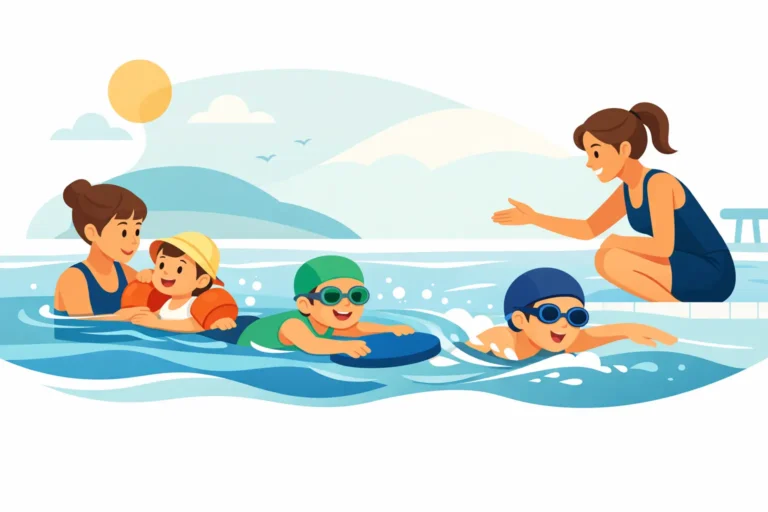
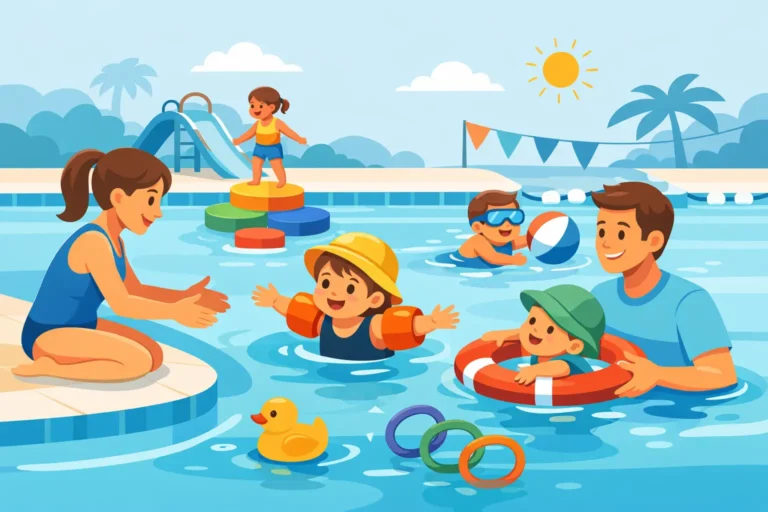
For some families, parent-accompanied lessons are the best first step. For others, a coached small-group setting works well because children often learn by watching peers. The right choice depends on the child’s temperament and the quality of supervision. What matters most is that the lesson is age-appropriate, calm, and consistent.
Start with water confidence, not technical swimming
When parents search for how to start toddler swimming, they sometimes worry that their child is falling behind if they are not learning formal strokes early. In practice, stroke technique is not the priority for toddlers. At this stage, the goal is to create safe, repeatable responses in the water.
That means learning to enter and exit safely, move toward an adult or wall, tolerate splashing, and maintain a stable body position with assistance. Breath control also starts early, usually through games that encourage bubble blowing and comfort with the face near the water. These early skills support later floating, kicking, and coordinated movement.
There is a trade-off here. Some programs focus heavily on making lessons fun, while others emphasize structure from the beginning. Toddlers generally need both. Fun keeps them engaged, but structure is what turns activity into measurable progress. A child who only plays may enjoy the pool but still lack safety habits. A child pushed too hard may resist lessons altogether.
What parents should look for in a toddler swim program
Not every toddler swim class is built around progression. Some are casual water play sessions, while others are designed to develop specific readiness skills. If your goal is long-term water safety and smooth progression into formal swimming, the structure of the program matters.
Look for lessons with clear instructor control, small teaching steps, and repeatable routines. Toddlers respond well when they know what comes next. The coach should use simple cues, maintain close supervision, and keep activities purposeful. A good lesson may look playful from the outside, but every activity should support balance, breath control, listening, or safe movement.
Coach experience is especially important with toddlers. Young children can shift from calm to distressed very quickly, and the instructor must know how to manage that without creating negative associations. Skilled coaches do not force participation. They read the child, build cooperation gradually, and protect confidence while still moving the lesson forward.
If a program also aligns with a broader skills pathway, that is an advantage. Structured swim education works best when toddler introduction leads naturally into beginner lessons, then into stronger water survival and formal swim development.
Preparing your toddler before the first lesson
The best first lesson often starts at home. You do not need to teach swimming skills in the bathtub, but you can help your child become comfortable with basic sensations and routines.
Practice water on the shoulders, back, and hair during bath time. Let your toddler pour water from a cup, blow bubbles, and learn simple phrases such as hold, kick, and wall. Keep the tone calm. The goal is familiarity, not performance.
It also helps to prepare your child for the setting itself. Tell them where they are going, who will be there, and what will happen in simple language. Avoid promising that nothing scary will happen. Instead, reassure them that they will be safe, you will be nearby if appropriate, and the coach will help them step by step.
Timing matters more than many parents expect. A hungry, overtired toddler is far less likely to cooperate in the pool. Choose a lesson time that works with your child’s sleep and meal schedule, and arrive early enough that the transition feels steady rather than rushed.
What a strong first phase of lessons looks like
Early lessons should feel repetitive in a good way. Toddlers learn through routine, and repeated activities create security. A strong first phase often includes supported entry, movement through the water with assistance, holding the wall, kicking practice, bubble work, and short confidence-building games.
Do not expect every skill to click in the first few sessions. Some children take time to accept back floats. Others dislike getting water on the face. Progress may come unevenly. A toddler might suddenly start kicking well but still resist submersion activities. That is normal.
What you want to see is gradual improvement in comfort, attention, and response. Is your child recovering faster after splashes? Are they listening to the coach more consistently? Are they willing to try again after hesitation? These are real markers of development.
Structured schools such as AQZOG focus on this progression because early confidence and safety habits have a direct impact on later swim learning. Toddlers who build these fundamentals well tend to transition more smoothly into independent skill development.
Common mistakes parents make
One common mistake is measuring success by how far a toddler can move in the water. Distance is not the best indicator at this stage. Calm behavior, wall awareness, breath control, and willingness to follow instruction are often more valuable.
Another mistake is changing programs too quickly. If a child cries in the first one or two lessons, parents sometimes assume the class is not working. But some initial resistance is normal, especially in new environments. What matters is whether the coach can settle the child over time and whether progress appears across several sessions.
Parents also sometimes send mixed messages. If you appear anxious at the pool, your toddler will notice. If you treat the water as dangerous in one moment and expect confidence in the next, that confusion can slow learning. Safety should be taught seriously, but the emotional tone should stay calm and controlled.
Finally, avoid comparing your child with others. Toddler progression varies widely. The child splashing happily on day one may plateau later. The cautious child may become the more technically reliable learner once trust is built.
When to consider private lessons instead of group classes
Group lessons are often effective for toddlers because routine, social modeling, and consistency can support learning. But private lessons can be the better choice in certain situations.
If your toddler is highly fearful, struggles with attention, or needs a quieter setting, one-to-one coaching may allow faster progress. Private lessons also help when parents want more focused instruction on a specific challenge, such as water confidence, floating support, or transition readiness.
That said, private is not automatically better. Some toddlers respond well to seeing other children participate, and group settings can improve cooperation. The best format depends on the child’s personality, the coach’s skill, and the family’s goals.
How parents can support progress between lessons
Progress comes faster when lessons are consistent. Gaps of several weeks can reset confidence, especially for very young learners. Regular attendance helps toddlers remember routines and feel secure with the coach and environment.
Outside class, keep reinforcement simple. Talk positively about swimming, repeat familiar cues, and maintain comfort with water during bath time or supervised family swims. You do not need to reteach the lesson. In fact, too much correction from parents can confuse a toddler. It is usually better to reinforce comfort and let the coach lead skill instruction.
The best place to begin is with patience. Toddlers do not start swimming by performing. They start by trusting the process, accepting the water, and learning that safety comes first. When that beginning is handled well, everything that follows becomes easier.