Can Adults Learn Swimming Fast?
A lot of adults ask the same question before their first lesson: can adults learn swimming fast, or is it too late to feel natural in the water? The honest answer is yes, adults can make fast progress, but fast does not mean rushed. It means learning in the right order, with the right coaching, and focusing on safety and control before speed or style.
For many adults, the biggest barrier is not physical ability. It is tension, fear, poor breathing habits, or a past bad experience in the water. Once those issues are addressed properly, progress often comes quicker than expected. Adults usually learn well because they can follow instructions, understand body position, and stay committed to a clear progression plan.
Can adults learn swimming fast with proper coaching?
Yes, especially when lessons are structured and goal-based. Adults do not need to spend months struggling just to float or move across a short distance. With experienced instruction, many beginners can learn breath control, floating, kicking, and basic forward movement within the first few sessions.
What matters is how progress is defined. If fast means becoming comfortable putting your face in the water, floating independently, and swimming a short distance safely, that can happen relatively quickly. If fast means swimming multiple laps with efficient freestyle technique, that usually takes longer. The timeline depends on the starting point.
A complete beginner with water anxiety needs a different pathway than an adult who is already comfortable in shallow water but never learned proper strokes. Both can improve quickly, but their first milestones will not look the same.
What makes adult swimmers improve faster
The adults who progress fastest usually have three things in place: consistent lessons, realistic goals, and a coach who teaches in stages. Random practice often creates frustration because beginners repeat mistakes without realizing it. Structured learning builds one skill on top of another.
Breathing is usually the first major breakthrough. Many adults try to hold their breath too long, lift their head too high, or panic when water touches the face. Once exhaling into the water becomes normal, the rest of swimming starts to feel more manageable. Body position improves, kicking becomes more effective, and movement feels less tiring.
Confidence also plays a bigger role than most adults expect. A learner who trusts the process will often improve faster than someone who is physically stronger but constantly tense. In swimming, tension works against buoyancy and coordination.
The fastest way to learn swimming as an adult
The fastest route is not to jump straight into full strokes. It is to learn foundational skills in the right sequence. Adults often want immediate results, which is understandable, but skipping basics usually slows things down.
A strong progression begins with water adjustment, breath control, floating, and safe standing recovery. Then it moves into gliding, kicking, and simple arm actions. Only after those parts are stable should full stroke coordination become the focus.
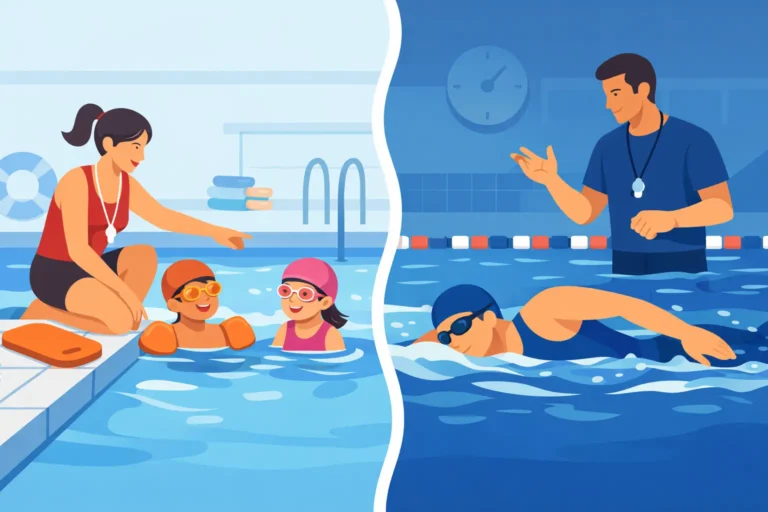
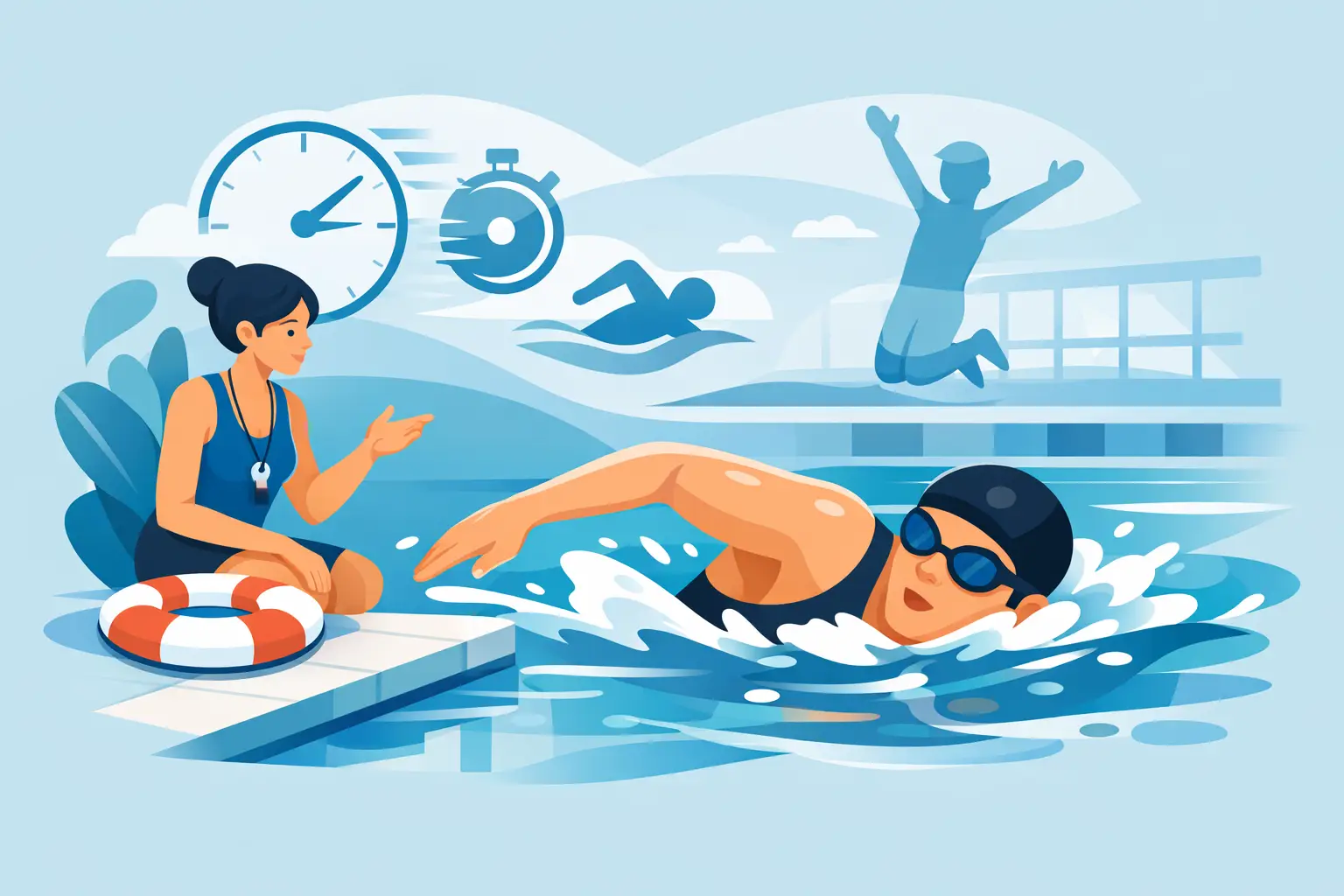
Private lessons can speed this up because every correction is personalized. Group lessons can still be very effective, especially when class levels are well matched and the program follows clear milestones. The better option depends on the learner. Someone with significant fear may benefit from one-to-one attention first, while a confident beginner may do well in a structured group.
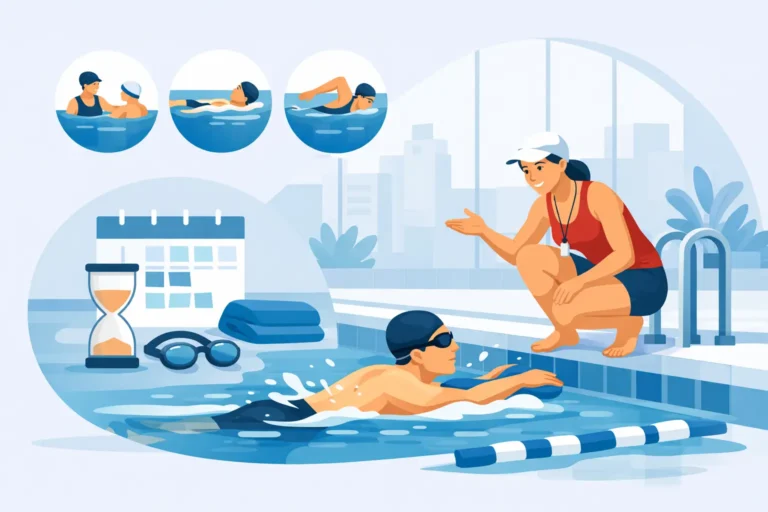
Short intensive programs can also help adults improve faster, but only when the sessions are frequent enough to build momentum without becoming overwhelming. Practicing once every few weeks is usually too slow for quick improvement. One to three sessions per week tends to create better continuity.
How long does it usually take?
There is no single timeline, but there are realistic patterns. An adult who starts from zero and attends lessons consistently may learn basic water confidence and simple propulsion in a few weeks. Swimming with better rhythm and control often takes longer, especially if breathing is still inconsistent.
For some adults, six to ten lessons is enough to move from fear and hesitation to basic independent swimming over a short distance. For others, especially those with deep water anxiety, the early phase may take more time. That is not failure. It is still progress if the learner can submerge comfortably, float, and recover calmly.
Stroke quality takes longer than basic survival skill. That distinction matters. A person can become safer in the water before becoming technically polished. From a coaching perspective, safety and control should always come first.
Why some adults learn slowly even when they try hard
Effort alone does not guarantee fast results. Adults sometimes delay progress by practicing the wrong things repeatedly. Trying to force speed, overkicking, stiffening the neck, or rushing into deep water too early can all create setbacks.
Another common issue is embarrassment. Some adults feel they should already know how to swim, so they avoid asking questions or admitting fear. That usually leads to hidden tension and uneven progress. Good instruction removes that pressure by normalizing beginner steps.
Physical factors can matter too. Tight ankles, poor mobility, low fitness, or difficulty coordinating breathing and movement may slow the process. None of these make learning impossible. They simply mean the teaching plan needs to be adjusted.
What adults should expect in the first few lessons
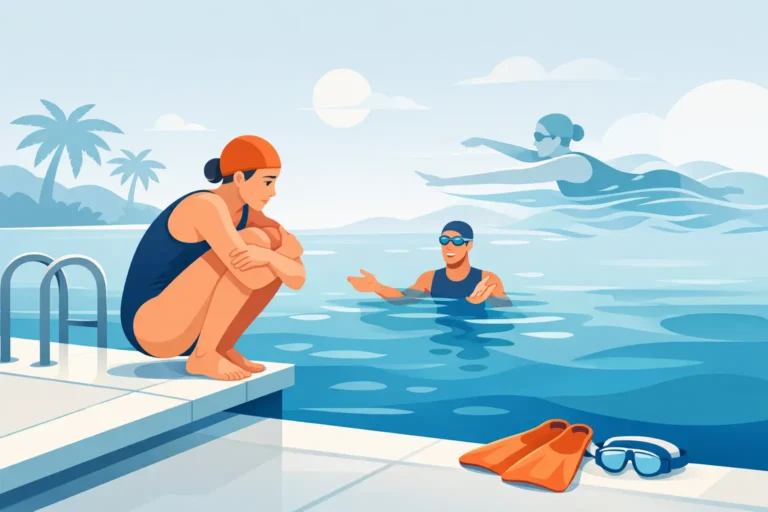
The first few lessons should feel structured, not chaotic. A good coach will usually assess comfort level, breathing control, float ability, and response to instruction before pushing into full swimming.
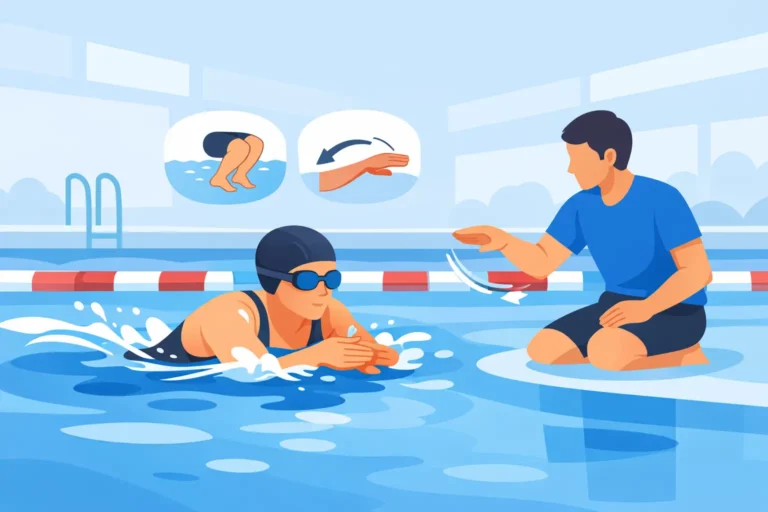
At the start, adults often work on entering the water calmly, blowing bubbles, submerging the face, back and front floating, and pushing off in a streamlined position. These skills may look simple, but they build the base for everything that follows. When they are skipped, learners often struggle later with panic, poor body alignment, or fatigue.
By the next stage, kicking and simple arm movement are introduced with attention to timing and recovery. At this point, many adults start to feel their first real sense of momentum. That feeling matters. It turns swimming from a stressful task into a learnable skill.
The role of fear in adult learning
Fear does not automatically mean slow progress. In some cases, adults with fear improve very quickly once they realize the lesson environment is controlled and the coach is not pushing them beyond readiness.
The key is graded exposure. Putting the face in the water for one second, then three, then five, is more effective than forcing a learner into a full deep-water attempt too soon. Floating with support, then with less support, builds trust in the water and in the body.
This is one reason structured swim schools often get better outcomes than casual practice. Adults need a progression they can measure. Small wins are not small in swimming. They are the foundation of confidence.
Choosing the right lesson format
Adults who want fast results should choose a format that matches both their goal and their comfort level. If the goal is water survival, basic confidence, or overcoming fear, the teaching style should be calm, patient, and highly progressive. If the goal is lap swimming, stroke correction, or test readiness, the program should be technical and measurable.
Private coaching is often best for adults with anxiety, irregular schedules, or specific targets. Group classes suit learners who benefit from routine and shared progression. Semi-private lessons can be a practical middle ground.
AQZOG has built its teaching approach around structured progression and safety-first instruction, which is exactly what adult learners need when they want efficient improvement without cutting corners.
How to speed up progress between lessons
Adults do better when they support lessons with simple habits. Showing up consistently is the biggest one. Even a strong lesson loses impact if too much time passes before the next session.
Mental rehearsal helps more than people expect. Reviewing breathing cues, body position, and recovery steps between lessons can make the next practice feel more familiar. General fitness also helps, especially mobility, core control, and steady breathing under light exertion.
If pool practice is available, it should be purposeful. Repeating a few correct drills is better than spending thirty minutes reinforcing poor habits. Quality matters more than volume in the early stages.
So, can adults learn swimming fast?
Yes, they can, if fast is measured by real skill development rather than shortcuts. Adults can build water confidence, learn to float, move safely, and begin swimming sooner than many assume. The best results come from structured lessons, steady practice, and a coach who understands how adults learn.
There is no prize for pretending to be advanced. The adults who improve fastest are usually the ones willing to learn the basics properly, ask questions early, and trust a clear progression. Swimming is not reserved for people who started young. It is a practical life skill, and with the right instruction, adults can learn it far faster than fear suggests.
If you are starting now, that is not late. It is simply your starting point, and a good starting point is all you need.