Weekly Classes vs Intensive Swimming
A child who forgets half of last week’s kicking drill is not failing. An adult who wants faster progress before a vacation or test is not rushing. These are two very different learning situations, which is why the choice between weekly classes vs intensive swimming matters more than most families realize. The best format is not simply the one that feels faster. It is the one that matches the swimmer’s age, confidence, goals, and ability to retain skills safely.
What weekly classes vs intensive swimming really means
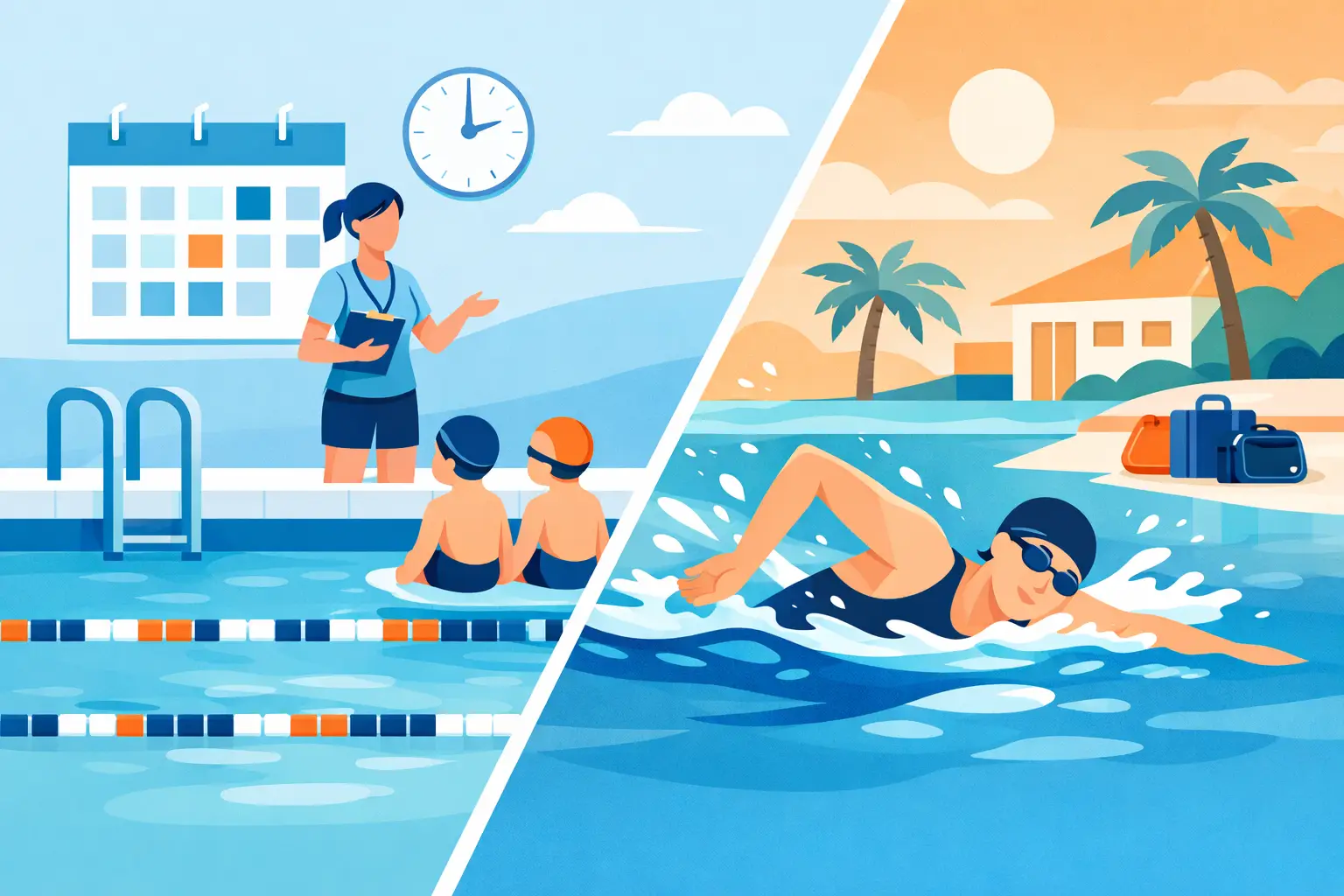
Weekly classes are the steady route. Swimmers attend once a week, build skills in sequence, and get time between lessons to absorb instruction. This format suits long-term development well, especially for young children who benefit from routine, repetition, and a familiar coach.
Intensive swimming is different by design. Lessons are compressed into a shorter period, often across several consecutive days during school breaks or before a practical assessment. The goal is accelerated improvement through frequent practice and close reinforcement. For some learners, that momentum is exactly what helps skills click.
Neither format is automatically better. The better question is what kind of progress you need, and by when.
Weekly classes work best for steady, lasting progression
For beginners, especially children, consistency usually beats speed. A weekly lesson gives the swimmer a manageable amount of instruction, followed by time to recover physically and process what they learned. That matters when the early milestones are not just about movement, but also about trust in the water, listening skills, breathing control, and basic survival habits.
Parents often focus on visible skills like kicking, floating, and freestyle arms. Those are important, but the foundation underneath them is just as important. A child who learns to enter the water calmly, respond to instructions, and recover posture after a mistake is building the kind of confidence that supports safe progression.
Weekly classes also support structured pathways such as stage-based swim development and certification preparation. Because instruction is spread out, coaches can observe patterns over time. They can spot hesitation, breathing issues, inconsistent leg action, or gaps in water orientation before those habits become harder to correct.
For adults, weekly lessons can be the smarter choice when fear is part of the picture. A nervous beginner often needs gradual exposure more than high volume. One good session a week can be enough to build confidence without overwhelming the learner.
Intensive swimming works best when timing and repetition matter
There are situations where intensive swimming is highly effective. If a child already has basic water comfort but needs stronger repetition to move through a plateau, concentrated lessons can create real momentum. If an adult needs focused preparation before a swim assessment, triathlon, or travel deadline, an intensive block can sharpen technique quickly.
The biggest advantage of intensive lessons is reduced forgetting. A correction made on Monday can be practiced again on Tuesday and Wednesday before the body slips back into old habits. That makes a difference for technical points like side breathing, streamline position, coordinated kicking, and rhythm.
This format is also useful for test-focused learners. Swim assessments often require more than one isolated skill. They demand a sequence performed with control, confidence, and endurance. Frequent sessions in a short window can help swimmers connect those pieces.
That said, intensive swimming is not a magic shortcut. If a swimmer lacks readiness, confidence, or physical stamina, packing lessons closer together may increase frustration rather than progress.
For young children, age and temperament matter a lot
A toddler or preschooler usually does not benefit from being pushed through too much instruction at once. At that age, attention span, emotional regulation, and comfort with the environment are major factors. Weekly lessons tend to be more suitable because they establish familiarity and reduce pressure.
School-age children can vary. Some thrive in holiday intensives because they enjoy routine and respond well to repetition. Others become tired, distracted, or resistant after several consecutive sessions. Parents know this pattern from school and enrichment activities already. Swimming is no different.
If your child is shy, easily overwhelmed, or still learning to trust the water, weekly classes usually provide a stronger foundation. If your child is already comfortable in the pool and learns well through repetition, an intensive program may help accelerate progress.
For adults, the right format depends on the goal
Adults often choose based on schedule first, but goal should come first. If the aim is to overcome water fear, learn proper breathing, and become safely independent in the pool, weekly lessons are often more sustainable. They allow gradual exposure and lower mental fatigue.
If the goal is sharper and more time-sensitive, intensive lessons can make sense. A learner preparing for a swim test, improving strokes for fitness, or trying to gain confidence quickly before an event may benefit from a short, focused block.
Adults also need to be realistic about recovery. Intensive learning asks more from the body and mind. If work stress, poor sleep, or inconsistent attendance is likely, a weekly schedule may produce better actual results than an ambitious plan that cannot be maintained.
Safety and retention should guide the decision
Swimming is a life skill. That means safety cannot be separated from speed. A swimmer who appears to improve quickly but cannot retain key habits after a short break may not be progressing as securely as it seems.
This is one of the biggest trade-offs in weekly classes vs intensive swimming. Intensive programs can create quick gains, but those gains may fade if there is no follow-up practice or structured continuation. Weekly classes tend to build stronger long-term retention because skills are revisited over time.
On the other hand, weekly classes can slow momentum if attendance is inconsistent or if too much time passes between corrective feedback. A child who misses several sessions may need to rebuild confidence. An adult who practices incorrect movement between lessons may reinforce the wrong pattern.
The strongest outcomes usually come from matching lesson format to the learner’s current stage, then adjusting as needed. A swimmer may begin with weekly classes, join an intensive block during school break, and return to weekly training for continued development. That is often more effective than treating the two options as opposites.
Cost is not just about the lesson fee
Families often compare price per lesson, but value is more important than raw cost. A cheaper format is not better if progress stalls. A more intensive option is not better if the swimmer becomes fatigued or forgets the skills after two weeks.
Weekly classes tend to spread costs more predictably over time. They are easier for many families to budget and fit into the school calendar. Intensive swimming may feel like a larger short-term spend, but it can be worthwhile when there is a clear objective, such as a holiday learning window or upcoming assessment.
Think in terms of outcome. Are you paying for long-term confidence building, accelerated stroke improvement, test readiness, or basic water survival? The answer changes what good value looks like.
How to choose the right path for your swimmer
If the swimmer is very young, fearful, or completely new to the water, weekly classes are usually the safer and more sustainable starting point. If the swimmer already has basic comfort and needs focused repetition, intensive lessons may produce faster gains.
If there is a certification target or school break available, an intensive block can be useful. If there is no urgent deadline and the real goal is durable skill development, weekly lessons are often the stronger base.
It also helps to consider what happens after the first phase. A short intensive may boost performance, but most swimmers still need continued structure to retain and expand those skills. That is where an experienced, progression-led program makes a real difference. AQZOG has long emphasized that swimming progress should be measurable, safe, and built on proper sequence rather than guesswork.
The best answer is often a combination
Many swimmers do best with both formats at different times. Weekly lessons build structure, confidence, and technique. Intensive swimming adds momentum when the timing is right. Used properly, they support each other.
The key is not to ask which option sounds faster. Ask which option helps this swimmer learn safely, retain skills, and move forward with confidence. That is the decision that leads to real progress in the water, and it is usually the one that lasts.