Bill Sweetenham’s Cold Water Test Swimming Theory
Bill Sweetenham’s Cold Water Test Swimming Theory
Singapore Sea Swimming, Open Water Safety & Performance Explained
Cold water swimming is often associated with winter seas, icy lakes, and temperate countries. In Singapore, where water temperatures remain warm throughout the year, many swimmers assume that cold water principles are irrelevant. However, legendary swim coach Bill Sweetenham strongly disagreed with this assumption.
Sweetenham’s cold water test swimming theory is not defined by extreme temperatures alone. Instead, it focuses on how the human body and mind react to sudden environmental stress—a condition that exists even in Singapore’s tropical seas.
This article is optimised for SEO ranking in Singapore and explains:
- Bill Sweetenham’s cold water theory
- What temperature is considered “cold” in Singapore
- Why sea swimming in Singapore still presents cold shock risks
- How this applies to open water swimming, SwimSafer, and water safety education
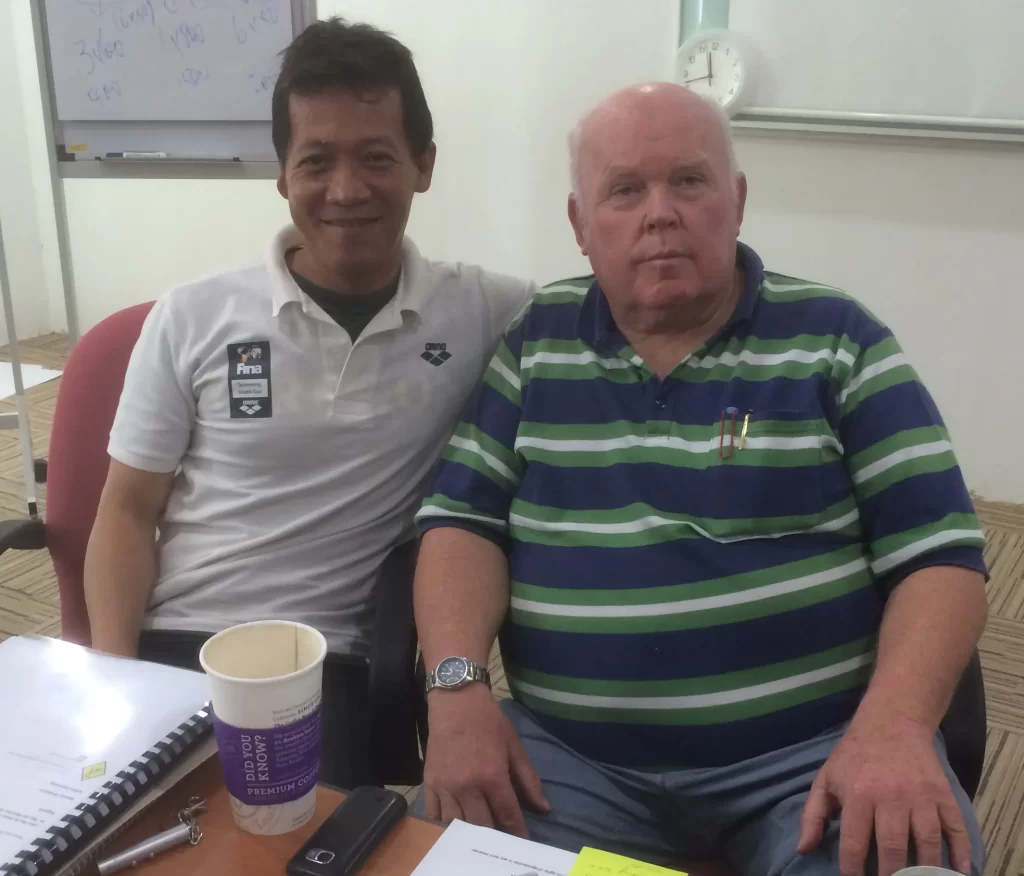
Who Is Bill Sweetenham?
Bill Sweetenham is one of the most influential swimming coaches in modern history. He served as:
- National Performance Director for British Swimming
- High-Performance Director for Australian Swimming
- Advisor to elite swim programs worldwide
Beyond producing Olympic champions, Sweetenham reshaped coaching philosophy by emphasising environmental adaptability, mental control, and physiological awareness.
One of his most important ideas is that:
True swimming ability is revealed when conditions are uncomfortable or unpredictable.
This philosophy forms the foundation of cold water test swimming.
What Is Cold Water Test Swimming?
Cold water test swimming is a controlled assessment of how swimmers respond to sudden immersion or environmental stress.
It evaluates:
- Breathing control
- Panic response
- Body position
- Muscle coordination
- Energy management
- Mental discipline
Sweetenham viewed cold water not as a punishment, but as a diagnostic tool that exposes weaknesses hidden by warm, controlled pool environments.
Is Cold Water Swimming Relevant in Singapore?
Yes—very much so especially today nov to feb.
Although Singapore does not experience winter temperatures, swimmers here are:
- Highly acclimatised to heated pools (30–32°C)
- Often inexperienced in open sea conditions
- Psychologically unprepared for sudden immersion
Sweetenham’s theory applies because cold shock is relative, not absolute.
What Temperature Is Considered Cold in Singapore?
Average Water Temperatures in Singapore
- Public swimming pools: ~30–32°C
- Sea water (East Coast, Sentosa, Southern Islands): ~27–30°C
- After heavy rain / monsoon conditions: ~25–26°C
Cold Water Definition (Singapore Context)
For swimmers accustomed to warm pools:
- Below 28°C → feels noticeably cold
- 26–27°C → mild cold shock likely
- Below 25°C → significant breathing and muscle impact
A sudden temperature drop of 3–5°C is sufficient to:
- Trigger gasp reflex
- Disrupt breathing rhythm
- Increase panic risk
Sweetenham stressed that sudden exposure, not absolute cold, is the real danger.
Core Principles of Sweetenham’s Theory (Applied to Singapore)
1. Cold Water Reveals True Swimming Skill
In warm pools, swimmers can compensate for:
- Poor breathing habits
- Inefficient body alignment
- Over-reliance on strength
In Singapore sea swimming:
- Waves disturb balance
- Salt water alters buoyancy
- Visibility is reduced
- Temperature feels cooler than expected
Sweetenham believed that environmental stress instantly exposes inefficient technique.
2. Breathing Control Is the First Survival Skill
Cold or cooler water—even at 27°C—can cause:
- Involuntary gasping
- Rapid breathing
- Loss of stroke rhythm
Sweetenham placed breathing mastery above speed and power. This principle is critical for:
- Open water swimming Singapore
- Sea sports (kayaking, SUP, sailing)
- Lifesaving and rescue scenarios
- SwimSafer survival components
Controlled exhalation is the primary defence against panic.
3. Control Before Speed
Many drowning incidents occur because swimmers:
- Panic
- Overkick
- Waste energy
- Lose orientation
Sweetenham taught a strict sequence:
- Control breathing
- Stabilise body position
- Regain awareness
- Apply movement
This philosophy aligns directly with SwimSafer survival skills and water confidence training in Singapore.
4. Mental Discipline Under Environmental Stress
Singapore swimmers entering the sea often face:
- Depth anxiety
- Fear of marine environment
- Sensory overload
- Loss of visual reference
Sweetenham believed cold water testing trains swimmers to:
- Accept discomfort
- Focus on process
- Avoid emotional reaction
This mental conditioning is essential for:
- Triathlons
- Open water races
- Sea survival situations
- Lifesaving training
5. Progressive Adaptation, Not Extreme Exposure
Sweetenham strongly opposed reckless cold exposure.
In Singapore, proper adaptation includes:
- Short sea entries
- Breathing drills at water entry
- Floating and sculling practice
- Survival backstroke in open water
- Supervised, gradual exposure
This trains the nervous system to remain calm under stress.
Relevance to SwimSafer and Water Safety in Singapore
Sweetenham’s theory supports national drowning prevention efforts by reinforcing:
- Calmness under stress
- Floating as recovery
- Energy conservation
- Environmental awareness
For SwimSafer Stage 4–6, these principles help bridge the gap between pool competency and real-world readiness.
Common Misconceptions in Singapore
“Singapore water is warm, so cold shock doesn’t happen.”
False. Relative temperature drop still disrupts breathing.
“Only weak swimmers panic.”
False. Panic is neurological, not skill-based.
“Cold water training is unsafe.”
Unsafe only without structure or supervision.
Why This Theory Matters for Singapore Today
Singapore has:
- Growing interest in open water swimming
- Increasing participation in sea sports
- Strong emphasis on swim education and safety
Sweetenham’s cold water theory provides a scientific, practical framework that links:
- Performance
- Safety
- Survival
- Mental resilience
Frequently Asked Questions (FAQ)
What is cold water swimming in Singapore?
Any water below 28°C that causes breathing disruption or shock, especially during sudden sea entry.
Is cold water training necessary in Singapore?
Yes, for open water swimmers, lifesavers, and advanced SwimSafer students.
Does rain affect sea temperature?
Yes. Heavy rain and monsoon conditions can lower surface temperatures significantly.
Can cold water testing prevent drowning?
Yes. It improves breathing control, floating ability, and panic management.
Is this suitable for children?
Only in modified form and under professional supervision.
Does cold water training improve swimming performance?
Yes. Better breathing control and mental discipline transfer to pool swimming.
Summary
Bill Sweetenham’s cold water test swimming theory remains highly relevant in Singapore, despite our tropical climate. Cold is relative, stress is real, and panic remains the leading cause of aquatic incidents.
For Singapore swimmers and instructors, the message is clear:
Swimming competence is defined by control under stress—not comfort in warm water.