Beginner Guide to Adult Swim Lessons
Standing at the pool edge as an adult can feel harder than it looks. Many first-time swimmers are not worried about effort – they are worried about control, breathing, and what happens if they panic. This beginner guide to adult swim lessons is built for that exact starting point: little or no experience, real hesitation, and a clear goal to become safer, more confident, and more capable in the water.
Adult beginners often assume they are behind. They are not. Adults usually learn differently from children, but that can be an advantage. You bring focus, body awareness, and a stronger reason for learning. Some adults want basic water safety. Others want to swim for fitness, prepare for travel, support a child in the pool, or finally overcome a long-standing fear. The right lesson structure should meet those goals directly, not treat every beginner the same.
What adult beginners actually need first
A good beginner guide to adult swim lessons starts with one truth: early progress is not about swimming laps. It is about becoming calm and functional in the water. That means learning how to enter safely, stand with balance, control breathing, float with support, and recover to a stable position.
This stage matters because panic usually begins when breathing becomes rushed or the body stiffens. Beginners often try to fight the water instead of working with it. Skilled instruction helps you replace that reaction with repeatable actions. Exhale into the water. Relax the neck and shoulders. Learn what buoyancy feels like. Practice recovery drills until they become familiar.
That may sound basic, but basic skills are what keep people safe. Stroke technique can come later. A swimmer who can float, breathe, and regain control is already making meaningful progress.
Why adult swim lessons feel different from kids’ classes
Adults tend to think more, anticipate failure faster, and carry stronger emotional baggage into the pool. A child may attempt a float after one demonstration. An adult may need to understand exactly where the hands go, what the lungs are doing, and how to recover if balance is lost.
That is not a weakness. It simply means instruction should be clear, progressive, and practical. Adults respond well when lessons explain the purpose behind each drill. If you know that blowing bubbles trains rhythmic breathing and reduces panic, the exercise feels less awkward and more useful. If you know that back floating teaches trust in buoyancy and recovery control, you are more likely to stick with it.
The best adult programs also respect pacing. Fast results matter, but forced progression usually slows learning. Some students need extra time with submersion. Others move quickly through floating and spend more time on freestyle breathing. Good coaching adjusts without losing structure.
Choosing the right lesson format
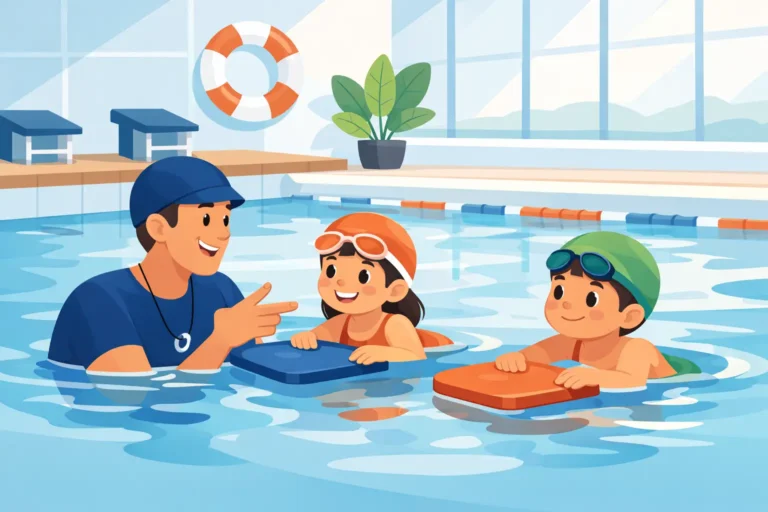
The format of your lessons affects confidence as much as the content does. Group classes work well for adults who like a clear weekly routine and are comfortable learning with others at a similar level. They are usually more cost-effective and can be motivating when the class is properly leveled.
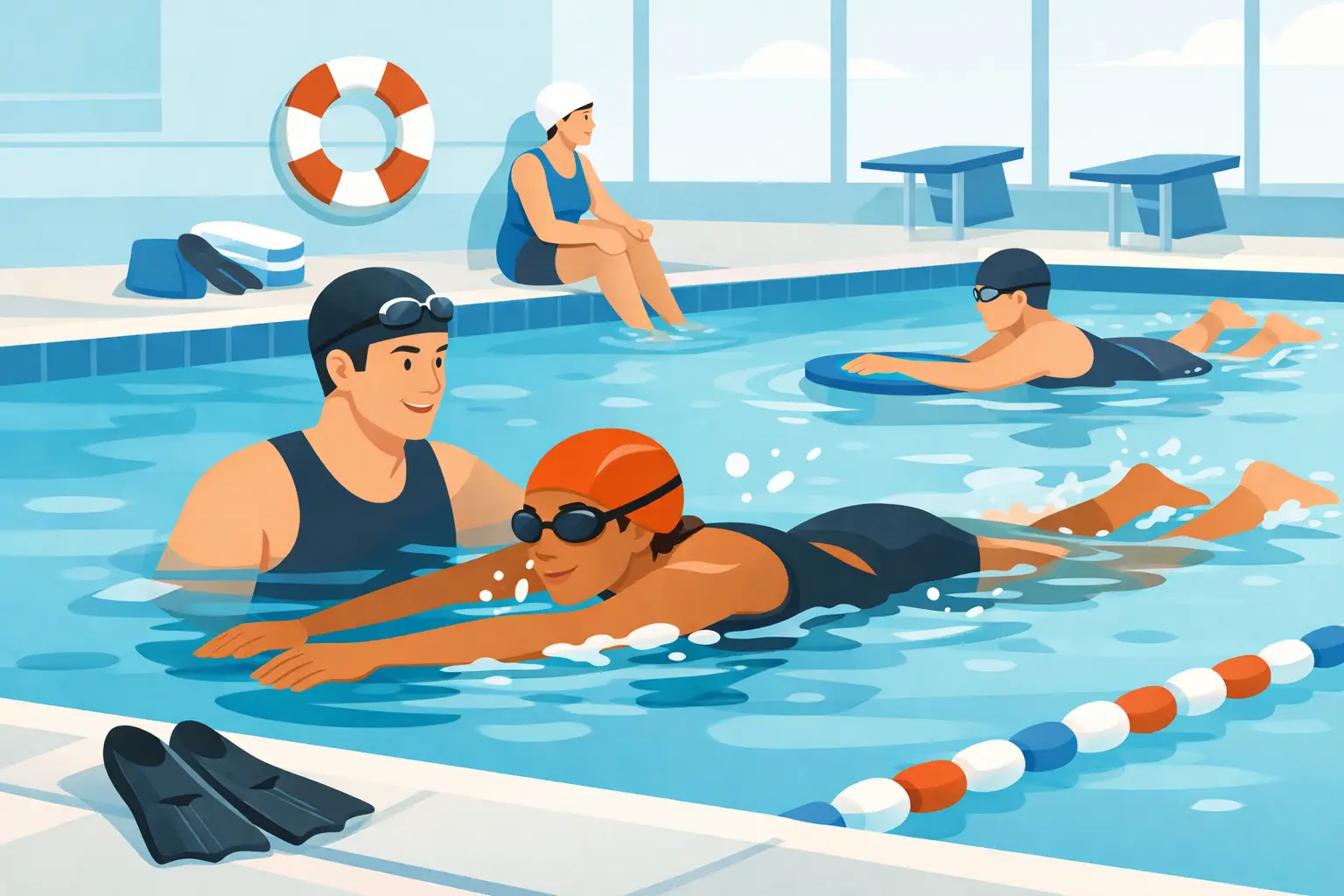
Private lessons are often the best fit for complete beginners, nervous swimmers, or adults with a very specific goal. If fear is a major barrier, one-to-one coaching can speed up progress because the lesson can focus on your exact sticking points. Semi-private lessons can work well for couples, friends, or family members who want a more personalized pace without going fully private.
There is a trade-off. Group classes offer consistency and shared momentum, while private lessons offer faster correction and tighter personalization. Neither is automatically better. The right choice depends on your comfort level, budget, and how much support you need in the early stages.
What to expect in your first few lessons
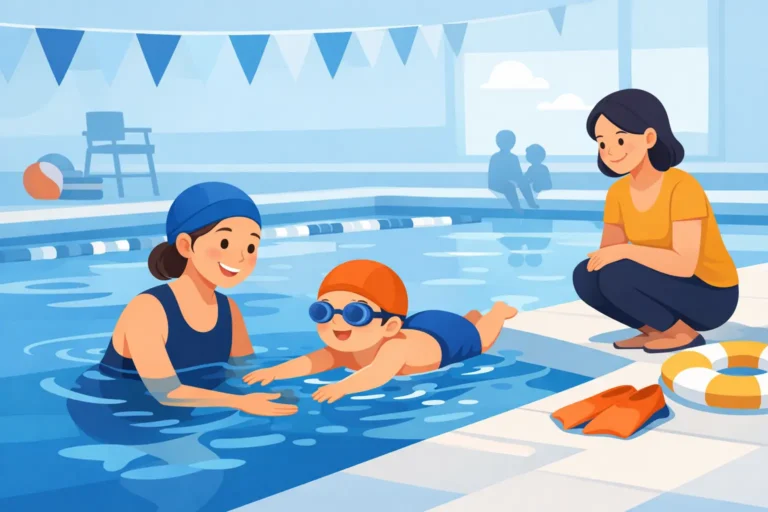
Most adults imagine the first lesson will be about swimming strokes. In reality, a strong first phase is usually more controlled than that. You may begin with pool orientation, water entry, holding the side, face wetting, bubble blowing, and supported gliding. If you are anxious, even getting comfortable with water over the ears can be a meaningful milestone.
By the next stage, many beginners start working on front and back floating, kicking position, body alignment, and simple propulsion. Breathing remains central throughout. Without breathing control, stroke work becomes frustrating. With it, everything else becomes easier to organize.
Freestyle often comes before other strokes because it builds movement efficiency, but not every beginner should rush into full-arm coordination immediately. Sometimes it is better to separate the parts – kickboard work, side breathing drills, short glides, and recovery practice – before trying to string them together.
Progress is rarely perfectly linear. One lesson may feel excellent, and the next may feel clumsy. That is normal. Swimming is a motor skill, and consistency matters more than any single session.
Common fears and how good coaching handles them
Fear of water is not always dramatic. Sometimes it shows up as tension, shallow breathing, refusal to put the face in, or an inability to float even when the body is physically capable. Many adult beginners are embarrassed by this, but it is extremely common.
Effective coaching does not challenge fear with pressure. It breaks fear into smaller tasks. Instead of demanding full submersion, the coach may start with mouth bubbles, then nose bubbles, then brief face immersion. Instead of insisting on an unsupported float immediately, the coach may use hand support and gradual release.
This method matters because confidence is built through successful repetition. If a student experiences manageable wins, the nervous system starts to recognize the water as a place where control is possible. That shift is often the turning point.
For some adults, fear comes from a past incident. For others, it comes from never learning as a child and feeling exposed now. In both cases, respectful progression is more effective than bravado. You do not need to act fearless to learn well. You need a process you can trust.
How to measure real progress
Adult learners sometimes judge themselves too harshly. They ask, “Why am I not swimming full laps yet?” A better question is whether your control in the water is improving. Can you submerge your face calmly? Can you exhale consistently? Can you float for longer? Can you move a short distance without stopping in panic?
Those are real performance markers. Stroke distance will come, but safety and control should lead. In structured programs, progress is easier to see because each lesson builds on a defined sequence of skills. That is one reason experienced swim schools, including AQZOG, emphasize progression rather than random practice.
If your goal is fitness, there will be a point when endurance becomes important. If your goal is water safety, you may prioritize floating, treading, and basic self-rescue. If your goal is to support your child in the pool, you may care most about confidence and functional movement. The right progress markers depend on the outcome you want.
What adults can do between lessons
Improvement does not only happen during class. Short, regular exposure helps. If you have pool access, repeat a few simple drills between lessons rather than trying to teach yourself advanced technique. Breathing practice, wall-supported kicking, front glide work, and relaxed back floating often give better returns than attempting full strokes with poor form.
Keep your expectations realistic. Two short practice sessions can be more useful than one exhausting one. Fatigue tends to increase tension, and tension makes learning harder. The goal is repetition with control.
It also helps to prepare mentally before each lesson. Know the one or two skills you are focusing on. If your breathing fell apart last time, go in expecting to work on rhythm rather than worrying about distance. Narrow goals reduce frustration and make progress easier to notice.
How to know a program is right for you
A strong adult beginner program should feel structured, safe, and measurable. You should know what skill is being taught, why it matters, and what comes next. Coaches should be patient but purposeful. Encouragement matters, but so does technical correction. If every lesson feels random, progress usually stalls.
Look for clear leveling, experienced instruction, and a teaching approach that values water safety from the start. Convenience matters too. Adults are more likely to stay consistent when lessons fit work schedules and travel time is manageable. The best program is not just the one with the biggest promises. It is the one you can attend regularly and trust to move you forward step by step.
If you are starting later in life, that does not make you late. It means your first goal is not perfection. It is competence, then confidence, then stronger performance. Start with the next skill in front of you, and let the results build from there.